First Impressions
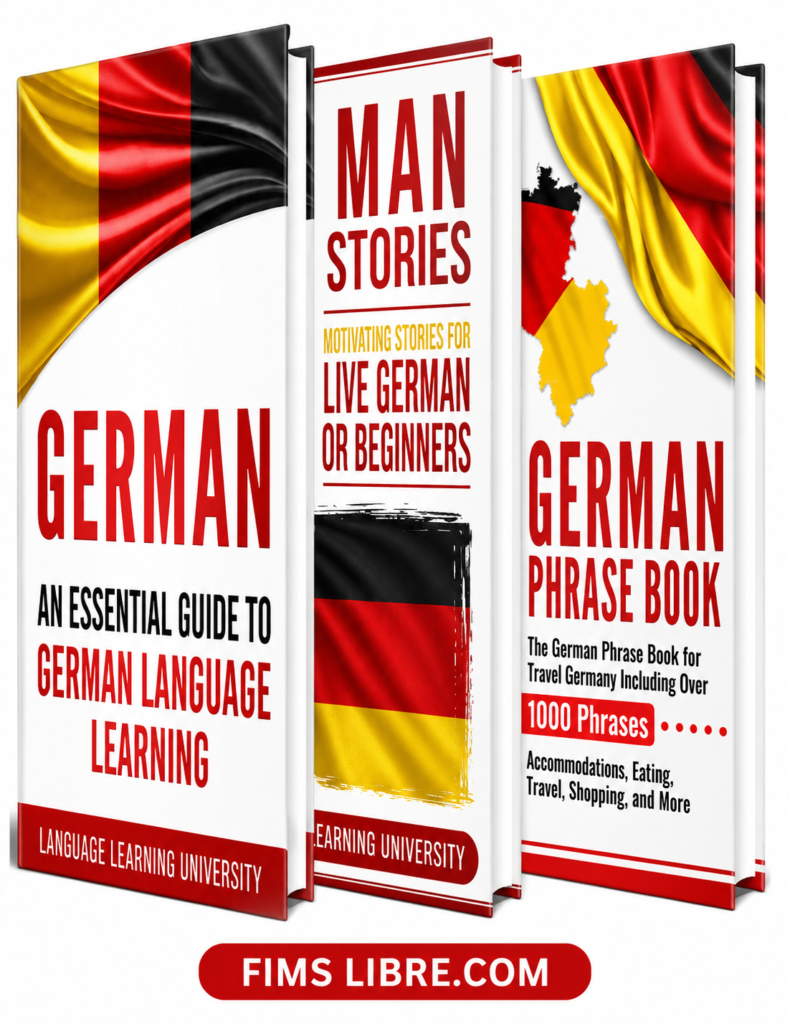
Honestly, when I first came across this three-book bundle, I was a little skeptical. You know how it is with these “everything-in-one” packs—sometimes they feel like they’re just throwing content at you to make the package look bigger, without really focusing on how it all fits together. I wasn’t expecting a deep, academic dive, but I was curious to see if it could actually help a beginner like me navigate the basics without getting completely overwhelmed.
The presentation is bold, definitely leaning into the “Language Learning University” branding, which I suppose is meant to sound authoritative. It didn’t feel like a classic, well-worn textbook, but rather something designed for the modern, fast-paced learner who just wants to get a jumpstart. I decided to treat it as a broad entry point rather than a single source of truth.
A Quick Walk Through the Content
The book is neatly split into three distinct parts:
- Part 1: The Essential Guide: This is the meat of the grammar. It walks you through pronunciation (including the tricky ch and sch sounds), nouns, cases (Nominative, Accusative, Genitive, Dative), pronouns, and sentence construction. It’s very structured, with clear tables for declensions and conjugations.
- Part 2: Short Stories: This section features nine simple stories, like Der tote Samen (The dead seed) and Ein wahrer Held (A true hero). The goal here is clearly to get you reading without getting overwhelmed by complex vocabulary.
- Part 3: The Phrasebook: This is the practical side. It covers everything from standard travel phrases to navigating emergencies, shopping, and bar interactions.
My Reading Experience
I found the grammar section to be very straightforward, which I appreciated. I’ve read other language books that get bogged down in linguistic theory, but this one sticks to the “what you need to know” approach. The inclusion of exercises after every few topics kept me honest. If I thought I understood the Nominative case, the exercises usually humbled me quickly!
“After completing this part, you should be able to spell your name. If a ‘ch’ or ‘sch’ occurs in your name, you now know how to pronounce it in German!”
I loved that the book didn’t try to hide how confusing German cases can be. It openly admits, for example, that there’s no simple rule for knowing when to use ß versus ss. That kind of candor makes it feel much more human than those books that promise “mastery in days.”
The short stories were a nice break from the drills, though I found some of them a little too simple. They were great for building confidence, but if you’re looking for complex literature, this isn’t it. Still, they served their purpose well as a bridge between pure memorization and actual language usage.
What I Took Away From It
What surprised me most was how much I enjoyed the phrasebook section. Usually, phrasebooks are incredibly dry, but this one is organized by context—traveling by train, checking into a hotel, or even flirting—which made it feel genuinely useful.
I also appreciated the emphasis on the “courtesy form.” The book explains the du versus Sie dynamic really well, noting that:
- You use Sie when you don’t know someone well.
- The courtesy form is especially important to elderly people in Germany.
- At work, you should wait to see how someone introduces themselves before switching to du.
It’s small social cues like that which are actually the hardest part of learning a new language.
A Couple of Weak Spots
To be fair, it’s not a perfect book. Because it tries to do three things at once, some sections feel a bit thin. The grammar part moves very fast. If you are a total beginner, you might find the chapter on verb tenses—jumping from Present to Future 2 in just a few pages—a bit overwhelming. I had to re-read the section on Plusquamperfect a few times before it clicked.
Also, some of the exercises in the back felt a bit repetitive. It’s fine for drilling, but I found myself wanting more diverse, creative ways to practice rather than just filling in blanks.
Who Will Probably Enjoy This
If you are a self-starter who likes having a bit of everything in one place, you’ll likely enjoy this. It’s perfect for the “occasional learner”—someone who wants to understand the rules of the road (grammar), get a little practice reading (stories), and have a cheat sheet ready for a trip to Germany (phrasebook).
If you are looking for a deep, exhaustive academic study, you might want to look elsewhere. But if you’re looking for a friendly, practical, and honest companion for your German language journey, this book is a solid, grounding starting point.
Final Thoughts
If you’re at the very beginning of your German journey and aren’t sure exactly which method works for you, this bundle is a decent way to test the waters. It doesn’t claim to make you fluent overnight, which I appreciate. It just offers a variety of ways to engage with the language. It’s a good, practical starting point for anyone who wants to avoid getting stuck in a single, potentially boring study habit. It won’t be the only thing you need, but it’s a helpful companion to have on your shelf.
Join Our Facebook Learning Groups
🇩🇪 Learn German Free 🇬🇧 English Learning Group 🇪🇸 Spanish Learning GroupJoin our educational Facebook communities to improve your language skills, practice daily conversations, and connect with learners from around the world.