My Review of Goethe-Zertifikat C1 Übungssatz 01
What’s This Book Really About?
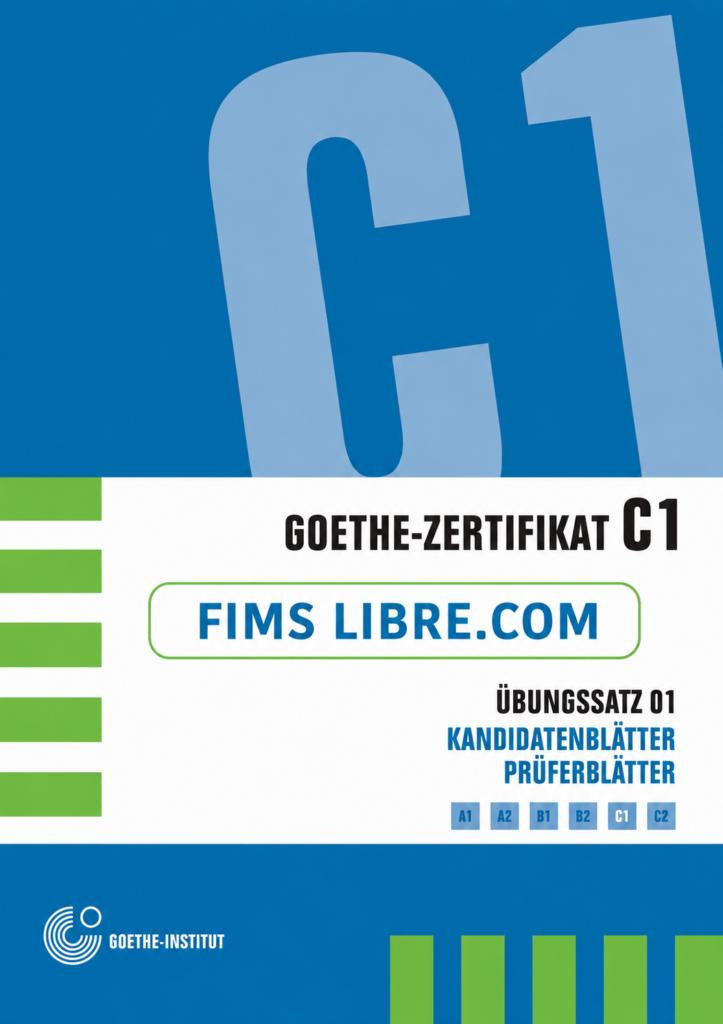
When I first opened Goethe-Zertifikat C1 Übungssatz 01, I knew I wasn’t looking at a typical German learning book. It became clear within a few pages that this is designed for learners who already have a strong command of the language and are preparing for the official Goethe C1 examination. Instead of teaching vocabulary or grammar chapter by chapter, the book focuses on helping candidates experience the exam before they actually sit it.
The material is organised around the four skills assessed in the Goethe C1 exam: reading, listening, writing and speaking. Rather than presenting isolated exercises, the book offers a complete practice examination that closely follows the structure and timing of the real test. I appreciated this approach because it allowed me to understand how one section naturally leads into the next, making the preparation feel much more realistic.
The reading section contains longer and more demanding texts than those found in lower-level exams. There are articles, reports, commentaries and informational passages that require careful analysis rather than quick scanning. Many questions ask the reader to recognise subtle arguments, distinguish opinions from facts and understand ideas that are only implied. It felt less like translating German and more like genuinely engaging with the content.
Listening practice follows the same philosophy. The recordings include interviews, presentations, discussions and reports spoken at a natural speed. The tasks expect learners to identify viewpoints, follow complex conversations and understand detailed information without relying on repeated listening. I noticed that concentration plays just as important a role as language ability here.
Writing tasks encourage candidates to organise their ideas into structured, coherent texts. Instead of producing simple emails or short messages, learners are expected to express opinions, compare viewpoints and develop clear arguments supported by logical reasoning. The speaking section also reflects this higher level by asking candidates to present ideas, discuss topics with another participant and respond thoughtfully during conversations.
One feature I found particularly useful was the inclusion of examiner materials alongside the candidate papers. Although these resources are especially valuable for teachers, they also help independent learners understand how performance is assessed. Overall, the book provides a realistic simulation of the examination rather than simply offering extra language exercises, which makes it feel purposeful from beginning to end.
Things That Stood Out to Me
Honestly, I expected the practice to be difficult, but I wasn’t expecting it to expose my weaknesses quite so clearly. Reading German at C1 level is one thing; doing it under exam conditions is something entirely different.
What surprised me most was how much attention the listening section demanded. I found myself replaying parts of the recordings during practice because a single overlooked detail sometimes changed the meaning of an entire answer. It reminded me that advanced language learning isn’t only about vocabulary—it’s also about staying focused.
Another thing I liked was how authentic the materials felt. The texts and tasks resembled situations that educated German speakers might genuinely encounter rather than simplified classroom exercises.
What Stayed With Me After Reading
Looking back, the biggest lesson I took from this book wasn’t grammatical at all. It showed me that confidence comes from familiarity. The more I worked through the exam format, the less intimidating it became.
I also realised that reaching C1 isn’t simply about knowing more words. It’s about understanding nuance, expressing ideas clearly and reacting naturally in both spoken and written communication. That became obvious as I moved from one section to another.
Maybe it’s just me, but I enjoyed seeing how each skill connected with the others instead of feeling like four completely separate tests.
A Couple of Weak Spots
To be fair, this isn’t the kind of resource that explains mistakes in detail. If you’re studying on your own, there will probably be moments when you’ll want additional feedback, especially for the writing and speaking tasks.
I also think learners who haven’t fully reached B2 or early C1 level could become discouraged fairly quickly. The book assumes you already possess a strong foundation and offers very little step-by-step teaching.
At one point I wished there were a few extra model responses with more commentary explaining why certain answers were stronger than others. That would have made independent practice even more valuable.
Final Thoughts
By the time I finished working through Goethe-Zertifikat C1 Übungssatz 01, I felt that I had gained something more useful than a collection of completed exercises. I had a much clearer understanding of the expectations behind the examination and a better sense of where my own strengths and weaknesses actually were.
If I’m being realistic, this book won’t replace regular reading, conversation practice or advanced grammar study. Those remain essential. What it does provide is an accurate rehearsal of the exam itself, allowing learners to prepare with fewer surprises on test day.
For anyone already studying at C1 level, I found it to be a thoughtful and practical preparation resource. It challenged me in ways I expected—and in a few ways I definitely didn’t—but by the end I felt more prepared, more aware of my progress and considerably more confident about what the real examination would demand.
Join Our Facebook Learning Groups
🇩🇪 Learn German Free 🇬🇧 English Learning Group 🇪🇸 Spanish Learning GroupJoin our educational Facebook communities to improve your language skills, practice daily conversations, and connect with learners from around the world.