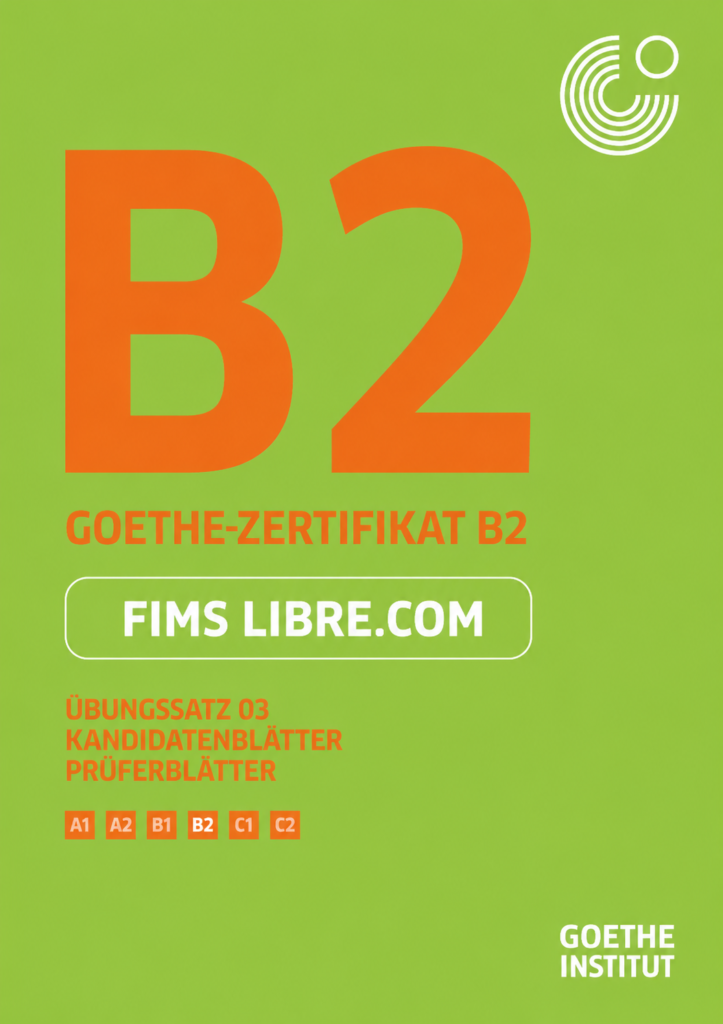
Working Through the Goethe-Zertifikat B2 Übungssatz 03 – My Honest Review
A Quick Walk Through the Content
I picked up Goethe-Zertifikat B2 Übungssatz 03 because I wanted to see how closely it reflected the actual B2 exam rather than simply offering extra grammar exercises. After spending time with it, I realised that this book is built almost entirely around exam preparation. It doesn’t try to teach the language from the ground up. Instead, it assumes you already have a solid intermediate level and want to understand the structure, expectations and difficulty of the Goethe B2 examination.
The book is organised around the four core skills tested in the official exam: reading, listening, writing and speaking. Each section follows the same style and timing as the real test, making it feel more like a rehearsal than a traditional workbook. I actually liked that approach because it helped me focus on how the exam flows from one task to another instead of treating every skill separately.
The reading section includes newspaper-style articles, opinion pieces, emails, advertisements and informational texts that require more than just recognising vocabulary. Many questions ask you to understand tone, identify key arguments or connect ideas across paragraphs. Compared to B1 materials, I immediately noticed that the texts expect a deeper level of comprehension and concentration.
Listening practice also becomes noticeably more demanding. The recordings are based on interviews, discussions, announcements and conversations where speakers talk at a natural pace. Rather than relying on simple facts, many tasks require following opinions and distinguishing between similar ideas. I found that these exercises encourage careful listening instead of guessing from a few familiar words.
Writing tasks focus on producing organised and coherent texts. Learners are expected to express opinions, respond to practical situations and present arguments in a logical way. The speaking section follows a similar pattern by asking candidates to discuss topics, exchange viewpoints and participate in structured conversations with another person. Looking through these activities gave me a realistic picture of what communication at B2 level actually involves.
Another useful feature is the inclusion of examiner materials and guidance alongside the candidate papers. While teachers will probably benefit from these resources the most, independent learners can also gain a better understanding of how different parts of the exam are assessed. Overall, the book feels like a complete practice examination rather than a collection of unrelated exercises, and that consistency is probably its biggest strength.
My Reading Experience
Honestly, I enjoyed using this book more than I expected. Practice exams can sometimes feel repetitive, but this one kept my attention because every section seemed to represent situations that felt believable rather than artificially constructed.
What surprised me most was how clearly it exposed my weak areas. I went into it feeling fairly confident about reading, but the listening section reminded me that understanding naturally spoken German is a completely different challenge. At one point I found myself replaying certain recordings simply because I had missed small details that completely changed the meaning.
I also appreciated that the book never gives the impression that passing B2 is easy. The level feels demanding, but not unfair. That made the practice feel worthwhile instead of frustrating.
What Makes It Different?
One thing that stood out was its realism. Many exam preparation books include isolated exercises, but this one presents complete exam-style papers that allow you to experience the pressure of moving from one section to another without interruption.
I also liked the balance between practical communication and language accuracy. Instead of encouraging memorised answers, the tasks expect you to organise your thoughts and communicate clearly, which feels much closer to real-life language use.
Maybe it’s just me, but I always learn more when I understand why an exam is structured a certain way, and this book helped me see that bigger picture.
A Couple of Weak Spots
To be fair, this isn’t a book for learners who still struggle with B1 grammar or vocabulary. If someone jumps into these practice papers too early, they might feel discouraged because explanations are fairly limited.
I also wished there were a few more detailed comments after the writing and speaking tasks. While sample answers are useful, additional explanations about common mistakes would have made self-study a little easier.
Another small issue is that completing several full practice papers can become mentally tiring. That’s probably unavoidable with exam preparation, but I definitely needed breaks between sections to stay focused.
Final Thoughts
Looking back, I think this book succeeds because it knows exactly what it wants to be. It doesn’t try to replace a grammar course or vocabulary builder. Instead, it concentrates on preparing learners for the experience of taking the Goethe B2 examination.
If I’m being realistic, working through these practice papers won’t instantly raise your language level. You’ll still need regular reading, listening, speaking and vocabulary practice outside the book. However, it does provide an honest measure of your readiness and highlights the areas that deserve more attention.
By the end, I felt more familiar with the exam format and more aware of my own strengths and weaknesses. For anyone already studying at B2 level and looking for realistic exam practice, I found this to be a dependable resource that helped me prepare with far more confidence than I had before opening the first page.
Join Our Facebook Learning Groups
🇩🇪 Learn German Free 🇬🇧 English Learning Group 🇪🇸 Spanish Learning GroupJoin our educational Facebook communities to improve your language skills, practice daily conversations, and connect with learners from around the world.