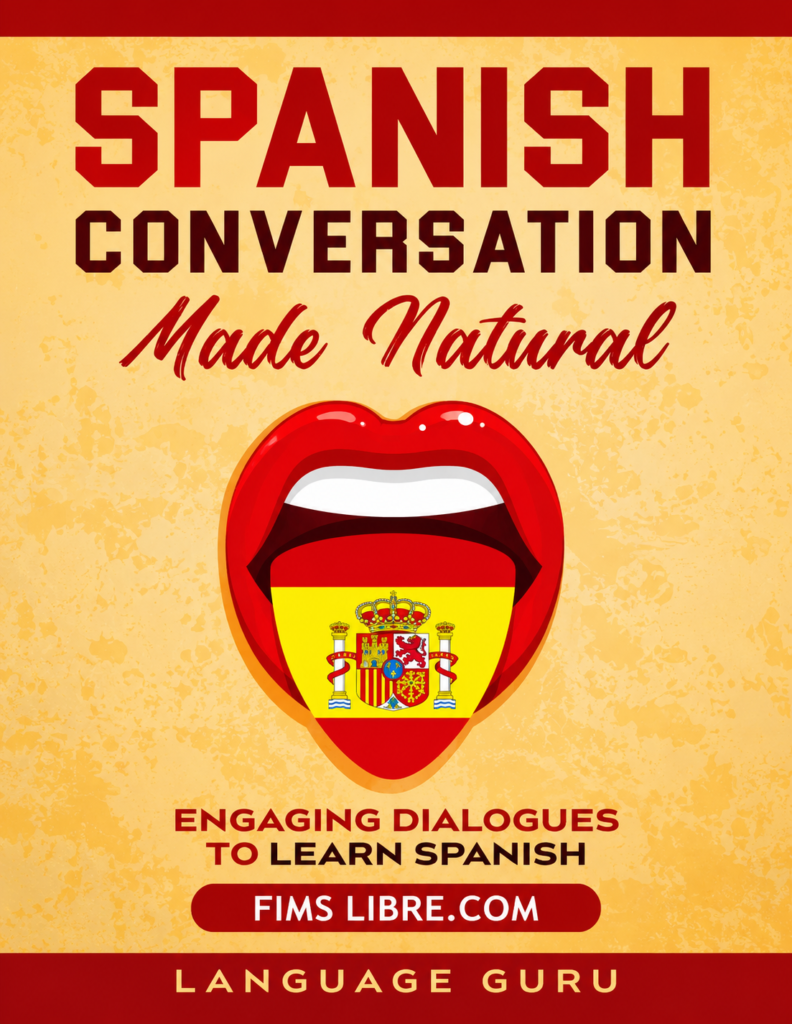
Learning Spanish Through Everyday Conversations: My Thoughts After Reading
A Quick Walk Through the Content
I picked up this Spanish conversation book hoping to find something practical rather than another grammar-heavy textbook, and that’s pretty much what I got. Instead of overwhelming the reader with complicated rules from the beginning, the book focuses on helping learners understand how Spanish is actually used in everyday situations. The main goal seems to be building confidence through conversation instead of memorizing endless grammar tables.
The chapters move through common real-life scenarios that language learners are likely to face. There are conversations for greetings, introductions, asking for directions, shopping, travelling, ordering food, meeting people, and handling everyday interactions. Each dialogue introduces useful expressions that naturally appear in spoken Spanish, making the lessons feel connected to real communication rather than isolated vocabulary lists.
Another thing I noticed was that new vocabulary isn’t simply thrown onto the page. Words are presented within conversations, making it easier to understand their meaning from context. Alongside the dialogues, the book gradually introduces grammar points and sentence patterns without making them feel intimidating. That approach makes the learning process much smoother, especially for beginners.
The progression also feels sensible. Early conversations are short and simple, while later sections become a little more detailed and require a better understanding of sentence structure. I liked that the book doesn’t rush readers. Instead, it slowly builds confidence through repetition and practical examples. It encourages learners to read the dialogues several times, pay attention to pronunciation, and actively practise speaking rather than only reading silently.
My Reading Experience
Honestly, I wasn’t expecting to enjoy this as much as I did. Conversation books sometimes feel repetitive after a few chapters, but this one managed to keep me interested because every lesson had a practical purpose.
I found myself reading many of the dialogues out loud just to hear how they flowed. It might sound a little strange if someone walks past your room, but it genuinely helped me remember phrases better. Some conversations even felt like scenes from everyday life instead of exercises from a textbook.
One thing that surprised me most was how approachable everything felt. Even when unfamiliar words appeared, I rarely felt completely lost because the surrounding dialogue usually made the meaning obvious. That made reading much less stressful than constantly reaching for a dictionary.
Things That Stood Out to Me
The biggest strength is definitely its practical focus. Rather than teaching Spanish as a collection of grammar rules, it teaches the language as something people actually use to communicate.
I also appreciated the gradual increase in difficulty. The lessons become more challenging over time, but never so quickly that I felt left behind. Looking back, I realised I was recognising recurring sentence patterns without consciously trying to memorise them.
Another positive is that the conversations don’t feel overly artificial. Of course, they’re written for learners, so they remain simple, but many of them resemble situations that travellers or new learners could realistically experience.
A Couple of Weak Spots
To be fair, the book isn’t perfect.
If you’re looking for detailed explanations of grammar, you may find yourself wanting more. Some language learners enjoy understanding why every sentence is structured in a particular way, while this book often prefers to let examples do the teaching.
I also felt that a few conversations became slightly repetitive after a while. Repetition certainly helps with learning, but occasionally I wanted more variety or slightly longer dialogues that explored different styles of speaking.
Another small limitation is that modern spoken Spanish changes depending on the country and region. Since this book aims to teach general conversational Spanish, readers may still need additional resources if they’re preparing for a specific dialect or local expressions.
What I Took Away From It
What stayed with me after finishing wasn’t a long list of vocabulary words. Instead, it was the feeling that speaking another language becomes much less intimidating when you practise through realistic conversations.
Maybe it’s just me, but books like this remind me that language learning isn’t about knowing every grammar rule before opening your mouth. It’s about becoming comfortable enough to communicate, make mistakes, and keep improving.
I wouldn’t use this as my only Spanish learning resource, but I think it works very well alongside grammar books, listening practice, or language apps. It fills the gap between studying rules and actually using the language.
Final Thoughts
Overall, I enjoyed reading this conversation guide more than I expected. Its greatest strength is its simplicity. Rather than trying to impress readers with complicated lessons, it stays focused on helping them communicate in everyday situations.
It does have a few limitations, particularly for learners who enjoy detailed grammar explanations or more advanced conversations. Still, for beginners and lower-intermediate learners, it offers a comfortable way to build speaking confidence without feeling overwhelmed.
After finishing it, I came away with a better sense of how everyday Spanish flows naturally in conversation. For me, that’s a far more valuable takeaway than simply memorising another long vocabulary list.
Join Our Facebook Learning Groups
🇩🇪 Learn German Free 🇬🇧 English Learning Group 🇪🇸 Spanish Learning GroupJoin our educational Facebook communities to improve your language skills, practice daily conversations, and connect with learners from around the world.