My Honest Thoughts After Reading This Book
First Impressions
Honestly, I wasn’t expecting to spend much time with a vocabulary book. These kinds of books can sometimes feel repetitive after a few pages, and I thought I’d probably skim through it. Surprisingly, I kept coming back to it over several days.
Because each section is fairly short, I never felt pressured to finish huge chapters at once. I found myself reading ten or fifteen pages, taking a break, and then returning later without losing my place. That simple structure made studying feel much less like a chore.
What surprised me most was how often I recognised words I’d already seen in language apps or beginner Spanish videos. Seeing them collected together helped reinforce what I had learned elsewhere.
What’s This Book Really About?
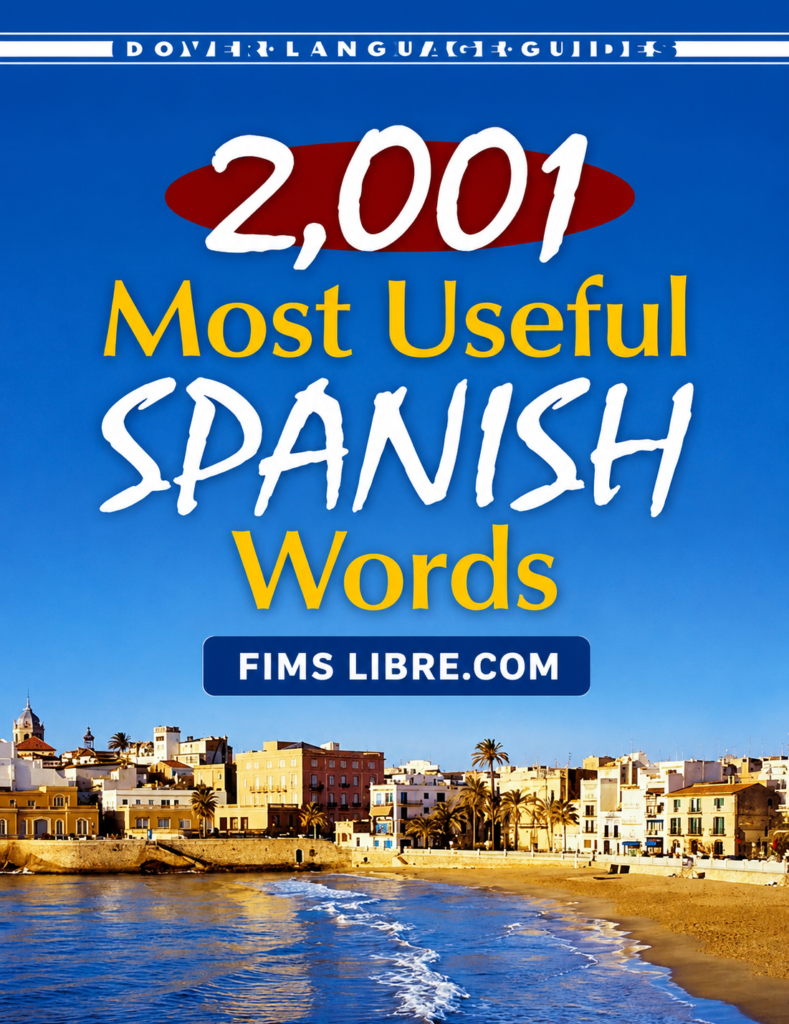
When I first opened this vocabulary book, I expected nothing more than a long list of Spanish words with English translations. Thankfully, it offers a bit more structure than that. The main idea is simple: help learners become familiar with the words they are most likely to encounter in everyday Spanish. Rather than trying to teach every possible term, it focuses on the vocabulary that appears most frequently in conversations, reading, and daily situations.
The book is organised into manageable sections, making it easier to work through without feeling overwhelmed. It introduces words from different categories, including common verbs, adjectives, nouns, numbers, colours, family members, food, travel, work, emotions, and many other practical topics. Because the vocabulary is grouped in a logical way, I found it easier to connect related words instead of memorising random lists.
Another thing I appreciated was that the words gradually become more varied as the book progresses. It starts with the kind of vocabulary every beginner needs and slowly expands into words that appear in more detailed conversations and written texts. That progression felt natural rather than rushed.
Although the book is mainly vocabulary-focused, it occasionally gives enough context to help readers understand how certain words are used. I liked that it doesn’t try to overload every page with grammar explanations. Instead, it keeps the spotlight on recognising and remembering useful words. The overall layout is clean, straightforward, and easy to follow, making it suitable for short daily study sessions instead of long, exhausting study marathons.
Things That Stood Out to Me
The biggest strength of this book is its practicality. Nearly every page contains words that are genuinely useful rather than unusual vocabulary that beginners rarely encounter. That gave me the feeling that the time spent studying would actually pay off in real conversations.
I also liked the organisation. Grouping similar words together made remembering them much easier than jumping randomly between unrelated topics. Looking back, I realised I was naturally building small word associations instead of memorising isolated translations.
Another positive point is that the book doesn’t pretend vocabulary alone will make someone fluent. Instead, it quietly provides a strong foundation that learners can build on with grammar, listening practice, and speaking exercises.
A Couple of Weak Spots
To be fair, there were moments when I wanted a little more context. Memorising individual words is useful, but seeing them inside complete sentences often helps them stick in my memory much better.
At one point I caught myself wishing there were more example phrases or short dialogues throughout the book. Even one or two examples for difficult words could have made learning feel more natural.
I also think some readers might become tired if they try to study too many pages in one sitting. Since the focus remains on vocabulary throughout, it’s probably better to treat it as a daily reference rather than something to finish in a weekend.
What Stayed With Me After Reading
If I’m being realistic, this isn’t the sort of book that completely transforms the way you learn Spanish. Instead, it quietly does one job and does it fairly well. It helps you become familiar with the words that appear over and over again, which is something every language learner eventually needs.
Maybe it’s just me, but I’ve always found vocabulary easier to remember when I revisit it regularly instead of trying to memorise hundreds of words at once. This book naturally encourages that kind of steady progress.
I also noticed that after spending time with it, reading simple Spanish passages became a little less intimidating because I recognised far more words than before. Even when I couldn’t understand every sentence, I could usually grasp the general idea, and that felt encouraging.
Final Thoughts
Overall, I enjoyed this vocabulary guide more than I expected. It stays focused on helping learners build a practical Spanish vocabulary without unnecessary distractions or complicated explanations. The clear organisation, useful word selection, and manageable sections make it easy to return to whenever you have a few spare minutes to study.
It isn’t perfect. I would have appreciated more example sentences and a little extra context in certain places. Still, those limitations never overshadowed its main purpose.
After finishing it, I came away feeling that my Spanish vocabulary had become more organised rather than simply larger. For anyone building a foundation in the language, that’s a genuinely valuable step forward, and it’s the reason I’ll probably keep this book close by as a reference instead of leaving it on the shelf.
Join Our Facebook Learning Groups
🇩🇪 Learn German Free 🇬🇧 English Learning Group 🇪🇸 Spanish Learning GroupJoin our educational Facebook communities to improve your language skills, practice daily conversations, and connect with learners from around the world.