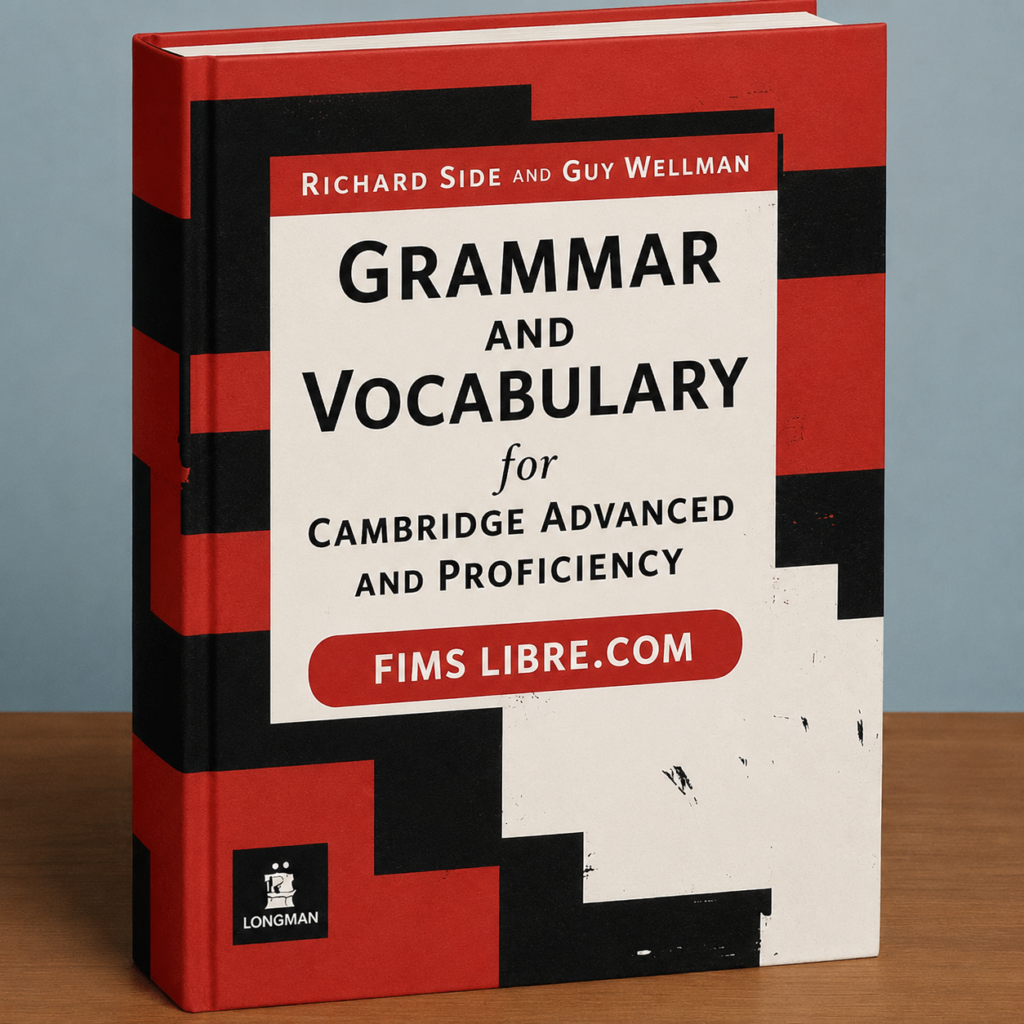
Beyond Rules: My Thoughts on English Grammar and Vocabulary for Cambridge Advanced and Proficiency
My First Impressions
I picked up this grammar and vocabulary guide expecting another dense exam-preparation book, but it turned out to be more practical than I had imagined. Since it’s designed for Cambridge Advanced (CAE) and Proficiency (CPE) learners, I knew it wouldn’t be an easy read. Still, I found myself appreciating how focused it is. Instead of overwhelming readers with endless theory, it tries to connect grammar and vocabulary with real language use.
It’s definitely not the kind of book you read from beginning to end in a single weekend. I treated it more like a study companion, opening different sections whenever I wanted to review a specific topic.
A Look Inside the Book
Most of the book is divided into carefully organised grammar and vocabulary units aimed at learners who already have a strong foundation in English. The grammar chapters cover everything from verb tenses and modal verbs to conditionals, passive structures, reported speech, articles, prepositions, clauses, and sentence transformations. Rather than presenting isolated rules, the explanations are followed by exercises that encourage readers to apply what they have just learned.
The vocabulary sections are equally detailed. They focus on common themes that frequently appear in advanced English exams, including education, work, travel, science, technology, culture, health, emotions, and everyday communication. Alongside individual words, the book spends considerable time on collocations, idioms, phrasal verbs, fixed expressions, and word formation. These are areas that often separate intermediate learners from advanced ones.
Another feature I appreciated was the variety of practice activities. Some exercises require choosing the correct grammar structure, while others ask learners to rewrite sentences, complete texts, identify mistakes, or build new words from root forms. This variety keeps the learning process from becoming repetitive.
The explanations generally remain concise. Instead of writing long paragraphs about grammar theory, the authors usually explain a rule briefly before letting the exercises reinforce the concept. For independent learners, that balance works surprisingly well.
The book also mirrors the style of Cambridge examination tasks. Many activities resemble the language transformation and vocabulary questions found in CAE and CPE exams, making it useful for students preparing for those qualifications while also improving their overall English.
My Reading Experience
What surprised me most was how often I caught myself making small grammar mistakes that I thought I had already mastered. Even after years of using English regularly, some chapters made me slow down and think more carefully about why one structure sounded more natural than another.
I don’t know why, but I especially enjoyed the vocabulary sections more than the grammar chapters. Learning new collocations and fixed expressions felt more rewarding because they immediately seemed useful in everyday writing and conversation. Some expressions were familiar, while others were completely new to me.
That said, I wouldn’t describe the experience as effortless. Some grammar units become fairly technical, particularly those dealing with advanced sentence structures. At one point I had to reread several explanations before everything finally clicked. Beginners would probably find these sections frustrating.
I also liked that the exercises gradually become more challenging instead of staying at the same level throughout. That progression made it easier to notice my own improvement.
Things I Appreciated
One of the biggest strengths is its organisation. Every chapter focuses on a specific topic without jumping around, so it’s easy to revisit weak areas later.
The practice questions also deserve credit. They don’t simply test memorisation; many require understanding how English works in context. I found this much more valuable than completing pages of repetitive fill-in-the-blank questions.
Another positive point is that grammar and vocabulary are treated as connected skills rather than completely separate subjects. That’s closer to how language is actually used, and it made the learning feel more natural.
I also appreciated that the explanations stay fairly direct. If I’m being realistic, I usually lose interest when grammar books become too academic. Fortunately, this one keeps moving.
A Couple of Weak Spots
To be fair, the book isn’t perfect. It assumes readers already possess a solid command of English, so complete beginners would likely struggle. Some explanations also move quite quickly, leaving readers to figure out the finer details through practice instead of explanation.
Visually, it feels quite traditional. There aren’t many colourful diagrams, illustrations, or modern layouts to break up long study sessions. After spending an hour with it, I sometimes wished the pages looked a little more inviting.
I also think some answer explanations could have been expanded. When I answered something incorrectly, I occasionally wanted more detail about why my choice was wrong instead of simply seeing the correct answer.
Final Thoughts
Looking back, I think this book succeeds because it focuses on practical improvement rather than trying to impress readers with complicated terminology. It’s demanding, but in a productive way. I finished several sections feeling that I had genuinely strengthened areas where I had been relying on guesswork before.
While it requires patience and consistent practice, it rewards the effort with a deeper understanding of advanced English grammar and vocabulary. It isn’t a book I would read casually from cover to cover, but it’s one I can easily imagine returning to whenever I want to sharpen my English or prepare for a high-level language exam.
Join Our Facebook Learning Groups
🇩🇪 Learn German Free 🇬🇧 English Learning Group 🇪🇸 Spanish Learning GroupJoin our educational Facebook communities to improve your language skills, practice daily conversations, and connect with learners from around the world.