First Impressions
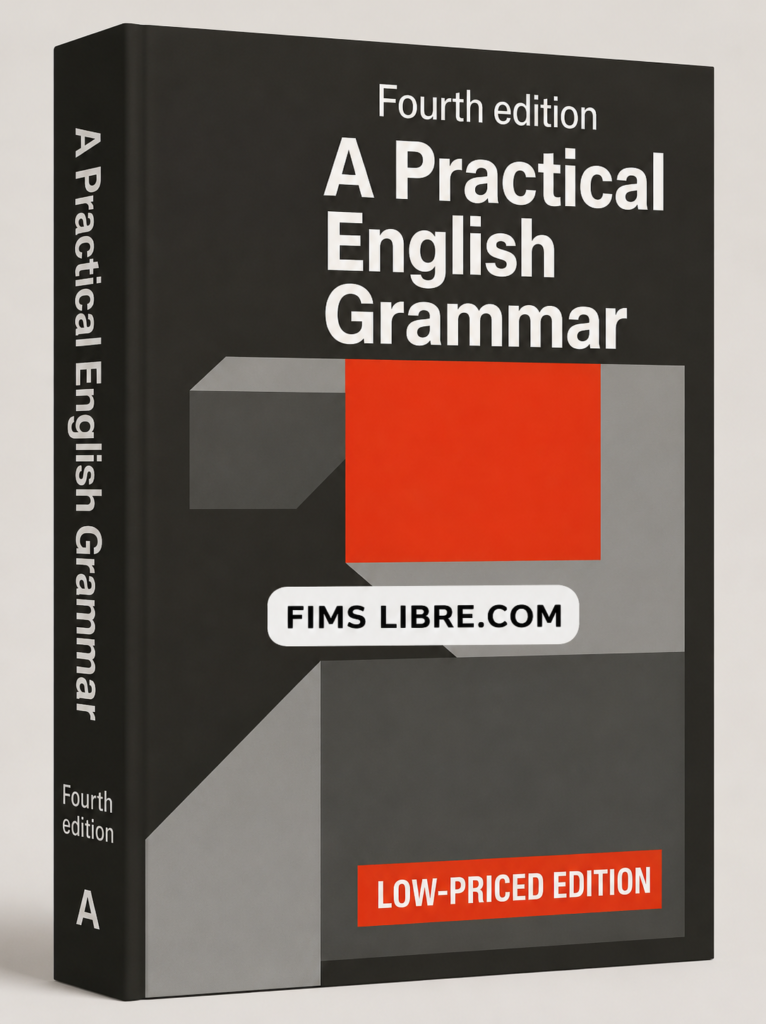
When I first picked up A Practical English Grammar by A.J. Thomson and A.V. Martinet, I was expecting a dry, dusty manual that would sit on my shelf gathering dust. Reference texts usually have a reputation for being clinical, filled with confusing terminology that makes your head spin after ten minutes. I didn’t think I would actually spend hours turning pages just to see how different rules connected, but I found myself pleasantly surprised by how accessible it felt right from the start.
Instead of overwhelming the reader with heavy academic jargon, it cuts straight to the chase. The layout is surprisingly inviting for a reference book, focusing on real-world application rather than abstract theory. Looking back, my initial skepticism faded pretty quickly once I realized how practical the structure actually was.
A Quick Walk Through the Content
At its core, this book functions as a comprehensive roadmap for English language structure, specifically tailored for intermediate to advanced learners and educators. The content is organized logically into distinct chapters that break down the mechanics of the language into manageable chunks.
It starts right at the foundation with articles, uncountable nouns, and determiners, clearly outlining tricky nuances like when to omit “the” or how “a little” differs from “little”. From there, it moves into core grammatical components including adjectives, adverbs, and pronoun structures. The authors pay special attention to areas that notoriously trip people up, such as proper adjective order, relative clauses, and subtle shifts in meaning caused by adverb placement.
A massive portion of the guide is dedicated to the verb system. It systematically unpacks modal auxiliaries, conditional sentences, indirect speech, and tense sequences. Rather than just listing conjugation tables, it contrasts similar structures—like the difference between “must” and “have to” or “be going to” versus “will”—showing how slight changes alter the speaker’s tone or intention.
The latter chapters dive into complex sentence construction, covering infinitives, gerunds, passive constructions, purpose clauses, and phrasal verbs. The book wraps up with handy reference sections on spelling rules, irregular verb tables, and numeric expressions.
Things That Stood Out to Me
What surprised me most was the emphasis on conversational English over rigid, outdated rules. Thomson and Martinet make a conscious effort to show how people actually speak today, pointing out where spoken habits diverge from strict formal grammar. That practical choice makes the whole book feel much more relevant and grounded.
I also really appreciated the sheer number of example sentences provided for every single point. They don’t just state a rule and leave you hanging; they illustrate it with clear, everyday dialogue snippets. The use of short conversation examples to show how native speakers respond in real time was a touch I found genuinely helpful.
A Couple of Weak Spots
To be fair, the book isn’t completely without its flaws. Because it tries to cover virtually everything, the presentation can sometimes feel a bit dense and monochrome. Page after page of numbered sections, lists, and examples can visually wear you down if you try to read it for extended stretches.
At one point, I found myself wishing for a few more visual aids, like charts or diagrams, to break up the endless blocks of text. If you are a visual learner, the traditional layout might feel a little monotonous. Additionally, while the explanations are clear, the tone remains neutral and direct throughout, so don’t expect any conversational humor or lighthearted narrative to break up the learning process.
Who Will Probably Enjoy This
If I’m being realistic, this isn’t a casual bedtime reader, nor is it meant for absolute beginners who are just starting to put their first sentences together. However, it is an absolute gem for intermediate or advanced students who want to polish their fluency and iron out subtle mistakes.
It is also an incredible reference tool for teachers or anyone who frequently writes in English and needs a quick, reliable sanity check on grammar rules. Whether you are checking tense harmony, conditional structures, or preposition pairings, the organized index makes finding quick answers painless.
Final Thoughts
Looking back at my time with this reference guide, it proved to be far more useful than I anticipated. It strips away the pretense often associated with language study, delivering straightforward guidance that you can apply immediately.
Maybe it’s just me, but having a clear, reliable resource like this nearby gives you a genuine confidence boost when navigating complex sentence structures. It earns its place on the desk as a dependable companion for anyone serious about mastering the nuances of the language.
Join Our Facebook Learning Groups
🇩🇪 Learn German Free 🇬🇧 English Learning Group 🇪🇸 Spanish Learning GroupJoin our educational Facebook communities to improve your language skills, practice daily conversations, and connect with learners from around the world.