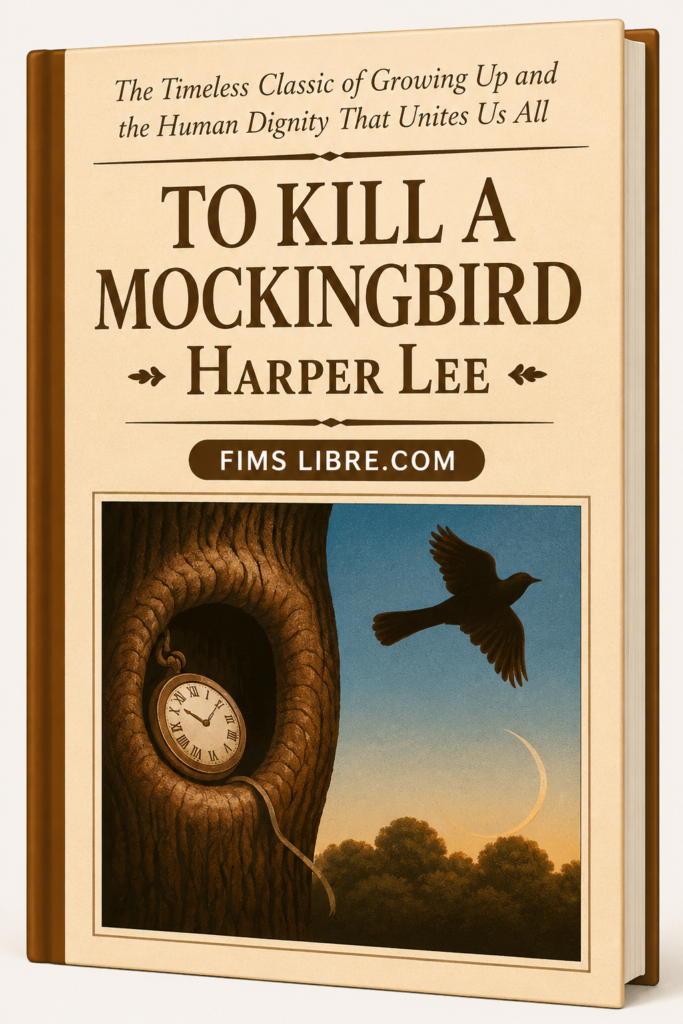
First Impressions
When I picked up To Kill a Mockingbird, I’ll admit I had a fair bit of hesitation. It is one of those titles almost everyone has pushed on them in high school English class, which usually ruins a story before you even turn page one. I managed to avoid reading it back then, so approaching Harper Lee’s classic as an adult felt like stepping into familiar territory without actually knowing where the path led.
Honestly, the opening chapters threw me off a bit. The narrative voice is unique—it’s an adult looking back on her childhood, but spoken through the raw, unfiltered eyes of a young girl named Scout. Early on, the story lingers on small-town rumors, family trees, and neighborhood legends in a sleepy Alabama town during the Great Depression. I wasn’t expecting the story to move so slowly at first, but once the atmosphere settled in, I found myself getting surprisingly drawn into Scout’s world.
What’s This Book Really About?
At its core, the story operates on two distinct levels that slowly intertwine as the plot unfolds. On the surface, it follows Scout (Jean Louise Finch), her older brother Jem, and their imaginative friend Dill during their summer adventures in Maycomb, Alabama. A big chunk of their childhood revolves around the local mystery: Arthur “Boo” Radley, a recluse living down the street whom the kids view as a shadowy phantom. Their harmless obsession with making Boo come out provides a nostalgic look at childhood innocence and neighborhood folklore.
However, the tone shifts drastically as Scout’s father, Atticus Finch, takes on a legal case that rocks the town. Atticus, a principled lawyer, is appointed to defend Tom Robinson, a Black man falsely accused of assaulting a white woman named Mayella Ewell. Through Scout’s eyes, we watch as Maycomb’s quiet, polite facade cracks open to reveal deep-seated racial prejudice and societal hypocrisy.
While the trial forms the heart of the second half, the book spends equal time showing how Scout and Jem process the harsh realities around them. Atticus tries to guide his children with patience, famously advising Scout that you never really understand a person until you climb into their skin and walk around in it. As the trial reaches its heartbreaking verdict, the myth of Boo Radley and the reality of human cruelty collide, forcing the kids to confront the loss of their innocence.
Things That Stood Out to Me
What surprised me most was how incredibly human Atticus Finch feels as a father. He isn’t portrayed as a flashy superhero or a flawless crusader; he’s just a tired, quiet man doing what he believes is right because he couldn’t face his children otherwise. His quiet dignity during moments of extreme hostility in the town stood out to me far more than any courtroom grandstanding.
I also really appreciated the dynamic between Scout and Jem. Their sibling relationship feels completely genuine—they fight, they challenge each other on silly dares, and Jem constantly tries to assert his maturity as the older brother while Scout stubbornly refuses to be left behind. Watching Jem slowly grasp the injustice of the trial while Scout still sees the world with naive simplicity creates a quiet, poignant contrast that hit me harder than I expected.
A Couple of Weak Spots
To be fair, the book isn’t without its flaws. The pacing in the first third can feel noticeably sluggish. If you come into it expecting an intense, fast-paced legal thriller, you might get impatient with the detailed descriptions of Maycomb’s social hierarchy, schoolhouse squabbles, and local eccentrics. At one point, I actually wondered when the main trial plot was going to kick into gear.
Another minor issue for me was how some secondary characters are framed. While Atticus and the kids are fleshed out with care, the Ewells feel almost cartoonishly villainous at times, leaving little room for nuance. Additionally, because the story is told through Scout’s youthful perspective, certain complex dynamics surrounding race in the 1930s South are kept somewhat simplified.
What Stayed With Me After Reading
Looking back, what lingers most isn’t just the famous courtroom speeches, but the quiet moments of empathy scattered throughout the narrative. The metaphor of the mockingbird—an innocent creature that does nothing but make music for people to enjoy, making it a sin to kill—resonates deeply across multiple characters who are misjudged or harmed by society’s cruelty.
If I’m being realistic, I didn’t expect a book written decades ago to feel so relevant to conversations we still have today about justice and moral courage. It’s a gentle yet unyielding reminder that standing up for fairness rarely guarantees an easy victory, but it is necessary nonetheless.
For readers looking for a thoughtful coming-of-age story anchored by rich character dynamics and timeless themes, it is well worth spending time in Maycomb. Just be prepared to let the story take its time setting the stage before it delivers its most powerful punches.
Join Our Facebook Learning Groups
🇩🇪 Learn German Free 🇬🇧 English Learning Group 🇪🇸 Spanish Learning GroupJoin our educational Facebook communities to improve your language skills, practice daily conversations, and connect with learners from around the world.