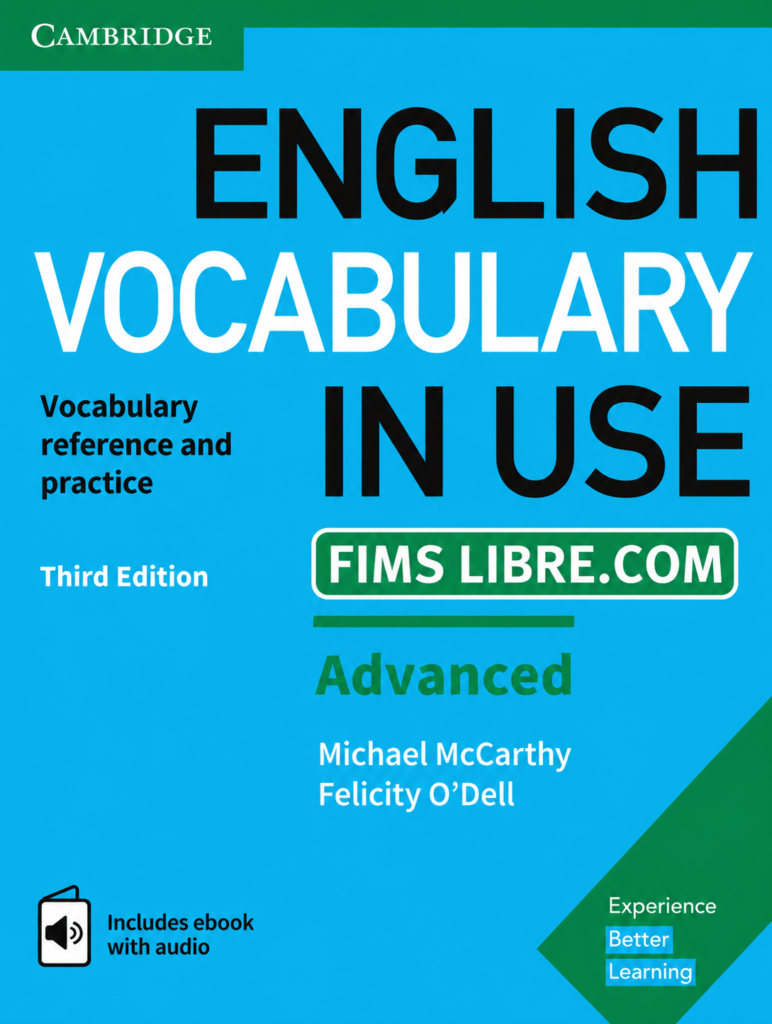
English Vocabulary in Use Advanced (3rd Edition) – My Honest Review
What’s This Book Really About?
After spending some time with English Vocabulary in Use: Advanced, I realised this isn’t the type of vocabulary book you casually flip through in a weekend. It’s clearly aimed at learners who already have a strong command of English and want to sound more precise, fluent, and natural. Rather than introducing basic words, it focuses on the kind of vocabulary that appears in academic writing, professional communication, newspapers, and everyday conversations between advanced speakers.
The book is organised into short, self-contained units, each covering a specific topic. Some chapters explore sophisticated vocabulary for discussing ideas, opinions, emotions, and social issues, while others concentrate on formal language, idiomatic expressions, collocations, metaphorical language, and subtle differences between words that seem almost identical. I found that the lessons often explained not just what a word means, but when and why you would choose it over another similar expression.
One feature I appreciated was the balance between explanation and practice. Every unit introduces new vocabulary with clear examples before moving into exercises that encourage you to apply what you’ve just learned. The activities aren’t simply about memorising definitions—they ask you to recognise context, choose appropriate expressions, and think carefully about how words naturally fit together.
The book also pays attention to word formation, prefixes, suffixes, pronunciation, and style. Some units highlight the difference between formal and informal English, while others focus on vocabulary commonly used in literature, media, science, politics, business, and modern society. There are regular review sections as well, making it easier to revisit earlier lessons instead of forgetting them after a few days.
Although it works well in a classroom, I actually felt it was designed with independent learners in mind. Since every lesson is fairly short, it’s easy to complete one whenever you have a little free time without feeling like you’ve interrupted the flow of the book.
My Reading Experience
Honestly, I expected another vocabulary book filled with long lists of difficult words. Instead, I found something much more practical. Rather than trying to impress the reader with obscure vocabulary, the book focuses on helping you understand how advanced English is actually used.
I found myself slowing down during several units because the explanations made me rethink words I thought I already knew. Sometimes two expressions looked almost identical, but the examples showed subtle differences that I had never really noticed before. Those small details ended up being some of the most valuable parts of the book.
At one point I realised I wasn’t just learning new words—I was becoming more aware of tone and context. That probably helped me more than simply expanding my vocabulary.
What I Liked Most (and a Few Things That Didn’t Work as Well)
What surprised me most was how naturally the book connected vocabulary with real communication. Instead of treating words as isolated items, it constantly showed how they combine with other words, change meaning depending on context, and sound more natural in certain situations. That made the learning process feel much more realistic than memorising endless vocabulary lists.
The exercises also deserve credit. Many require careful thinking rather than quick guessing, and I liked that they often challenged me to choose the most appropriate expression instead of merely finding the correct definition. The clean layout, consistent lesson structure, and clear examples made it surprisingly easy to study one unit at a time without feeling overwhelmed.
That said, it isn’t the easiest vocabulary book to work through. If I’m being realistic, some chapters demand patience because the differences between similar words can be extremely subtle. I occasionally had to reread explanations before they fully made sense.
I also wished there were more extended reading passages using the newly introduced vocabulary together. Most examples are short and helpful, but seeing the expressions used throughout a longer article or story would have reinforced them even better. And while the British English focus wasn’t a problem for me, learners who mainly study American English may notice occasional differences in vocabulary and spelling.
What Stayed With Me After Reading
Looking back, the biggest lesson I took from this book wasn’t simply learning more words. It was understanding that advanced English is often about choosing the right word rather than the most difficult one. Precision, tone, and context matter far more than using impressive vocabulary.
I also liked that the book encouraged steady progress instead of rushing through hundreds of new terms. Completing a single lesson each day felt manageable, and reviewing previous units helped the vocabulary stick much better than I expected.
Maybe it’s just me, but I think this is one of those resources that becomes more valuable the second or third time you open it. Every revisit reveals something you overlooked before.
Final Thoughts
After finishing English Vocabulary in Use: Advanced, I came away with the impression that it’s a dependable reference rather than a book you’ll finish once and put away forever. It’s carefully structured, practical, and focused on helping advanced learners use English with greater confidence and accuracy.
It certainly requires commitment, and some lessons are more demanding than others, but that’s also what makes it worthwhile. Instead of offering shortcuts, it encourages thoughtful learning through meaningful examples and consistent practice.
For learners who already have a solid foundation in English and want to refine their vocabulary, improve their expression, and understand the finer details of advanced language, this book offers plenty to return to. I know I’ll be keeping it nearby whenever I want to refresh a topic or discover a more natural way to express an idea.
Join Our Facebook Learning Groups
🇩🇪 Learn German Free 🇬🇧 English Learning Group 🇪🇸 Spanish Learning GroupJoin our educational Facebook communities to improve your language skills, practice daily conversations, and connect with learners from around the world.