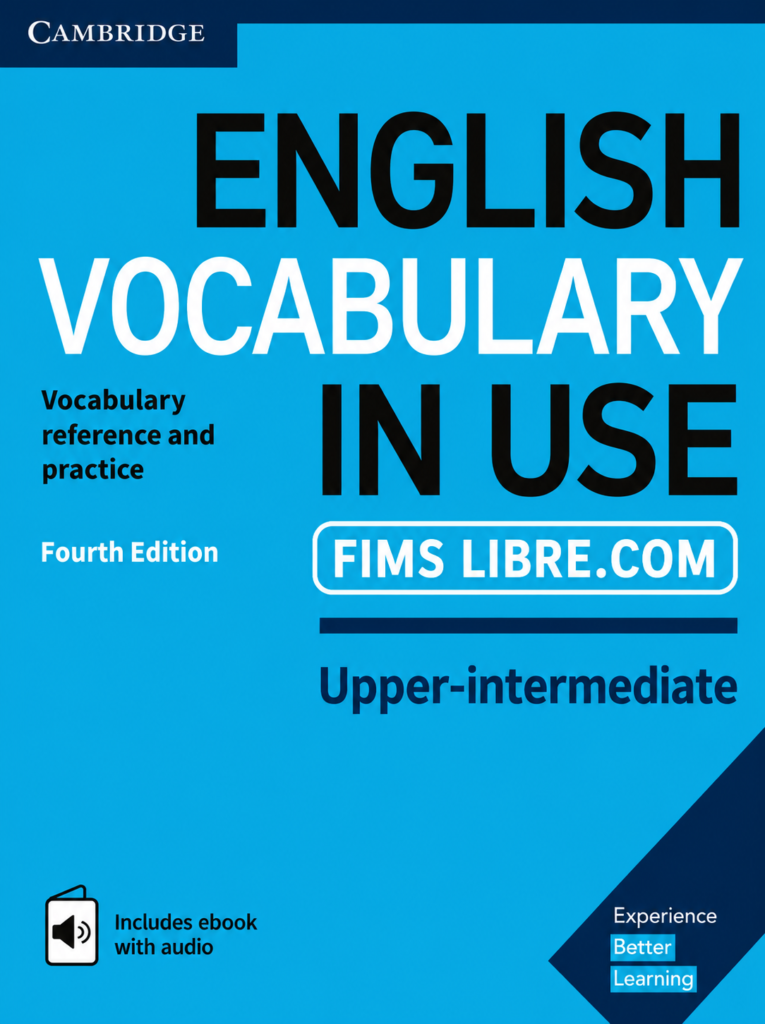
English Vocabulary in Use: Upper-Intermediate– My Honest Review
First Impressions
I picked up English Vocabulary in Use: Upper-Intermediate because I wanted a vocabulary book that focused more on practical English than endless word lists. From the first few pages, it was clear that this isn’t the kind of book you rush through. Instead, it feels like something you keep on your desk and return to whenever you want to strengthen a particular area of your English.
I wasn’t expecting it to be so organised. Every unit stays focused on one topic, which made studying feel less overwhelming. Rather than trying to teach everything at once, it builds vocabulary piece by piece, and I appreciated that approach.
A Quick Walk Through the Content
The book is designed for upper-intermediate learners who already know the basics of English and want to communicate more naturally. Instead of simply introducing new words, it explains how they are actually used in real situations. That difference became obvious as I worked through the chapters.
The lessons cover a wide variety of themes. Some units concentrate on everyday vocabulary, while others explore work, education, travel, relationships, technology, communication, emotions, business, and many other topics that people regularly encounter. Alongside individual words, there is plenty of attention given to common phrases, collocations, idioms, phrasal verbs, and word families, helping readers understand how vocabulary connects rather than existing in isolation.
One thing I found particularly useful was the two-page lesson format. The explanation usually appears on one page, followed by exercises on the next. After learning something new, you immediately get a chance to practise it instead of simply moving on. I found myself remembering expressions much better because of that structure.
Another feature I liked was the variety of examples. The book doesn’t rely on long grammar explanations. Instead, it uses natural sentences and short contexts that show how vocabulary fits into everyday English. There are also review sections spread throughout the book, encouraging learners to revisit earlier material instead of forgetting it after one lesson.
Although it can certainly be used in classrooms, I felt it works just as well for independent learners. Since every unit stands on its own, it’s easy to study a single lesson whenever you have twenty or thirty minutes available.
What I Liked Most (and a Few Things That Didn’t Work as Well)
Honestly, what surprised me most wasn’t the number of words—it was how often the book explained small differences between similar expressions. Those little distinctions are easy to overlook, but they make a noticeable difference when speaking or writing more naturally. I also appreciated that the exercises gradually became more challenging. Instead of relying on simple matching tasks, many activities asked me to choose the most appropriate expression for a real-life situation, which felt much more practical.
The layout deserves some credit too. Each unit is clean, well-organized, and easy to follow without feeling crowded. I never had to spend time figuring out where to look next, and that made studying much less tiring. The consistent two-page format also helped me build a routine because every lesson followed a familiar structure.
That said, the book isn’t perfect. To be fair, I wouldn’t recommend it to complete beginners. Many explanations assume you already have a solid foundation in English, so jumping into it too early could feel overwhelming. I also found myself wishing there were a few longer reading passages that used the newly introduced vocabulary together. The examples are useful, but seeing the words in longer contexts would have made the learning experience even stronger.
Another small limitation is that much of the vocabulary leans toward British English. That’s not necessarily a drawback, but learners who are more familiar with American English may occasionally notice different word choices or spellings. Even so, these were fairly minor issues and didn’t take away from the overall usefulness of the book.
My Reading Experience
Looking back, I think what kept me using this book was its consistency. I never felt pressured to finish large sections. Instead, I could complete one lesson, review it, and come back the next day without losing the flow.
There were several moments where I recognised words I had seen before but never fully understood. The explanations often filled those gaps, and I caught myself using some of the new expressions in writing much sooner than I expected.
Maybe it’s just me, but vocabulary books can sometimes become repetitive after a while. This one managed to avoid that feeling because the topics kept changing and the exercises varied enough to hold my attention. I didn’t enjoy every unit equally, but that’s probably normal with a book covering such a broad range of subjects.
Final Thoughts
After spending time with English Vocabulary in Use: Upper-Intermediate, I came away feeling that it’s a dependable learning resource rather than a book you’ll read once and forget. It doesn’t promise quick results or unrealistic shortcuts. Instead, it encourages steady progress through regular practice, practical examples, and thoughtful repetition.
Its biggest strength is helping learners move beyond simply knowing English words to actually understanding how those words fit into everyday communication. While a few sections may feel challenging and some readers might prefer more extended reading practice, those are relatively minor issues compared with the overall quality of the material.
If you’re already comfortable with intermediate English and want to expand your vocabulary in a structured but manageable way, this book offers plenty of value. I can easily see myself returning to individual units whenever I need a refresher, and I suspect that’s exactly how it was meant to be used.
Join Our Facebook Learning Groups
🇩🇪 Learn German Free 🇬🇧 English Learning Group 🇪🇸 Spanish Learning GroupJoin our educational Facebook communities to improve your language skills, practice daily conversations, and connect with learners from around the world.