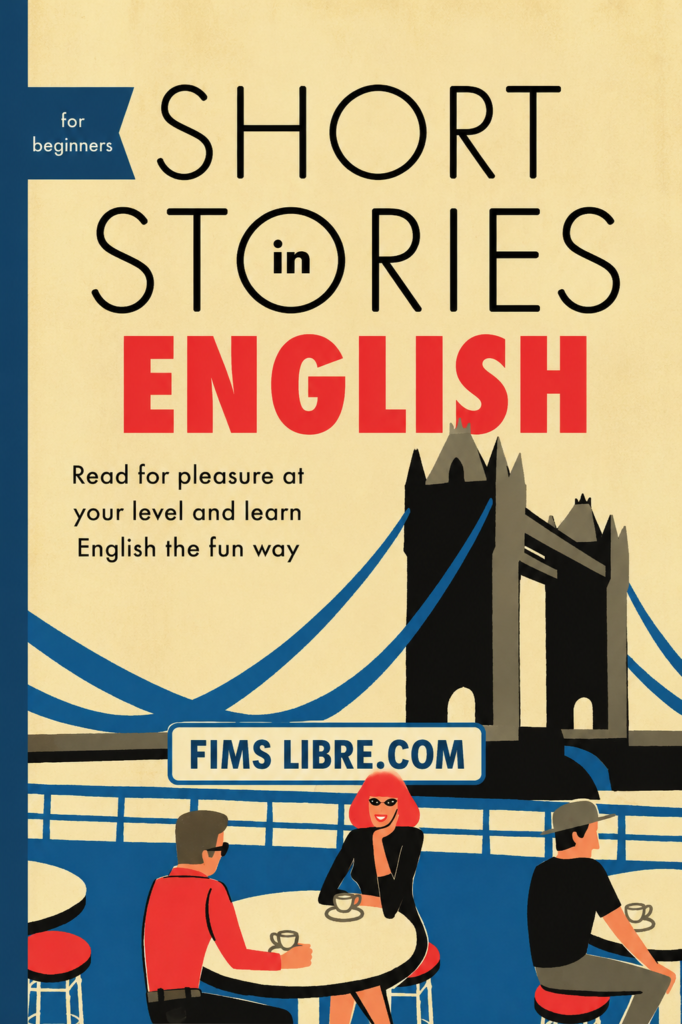
Short Stories in English for Beginners – An Honest Review
First Impressions
When I first picked up Short Stories in English for Beginners by Olly Richards, I expected another typical English-learning book filled with dull exercises and predictable dialogues. Thankfully, that wasn’t the case. The biggest difference I noticed almost immediately was that it focuses on learning through enjoyable reading instead of making grammar feel like a school lesson. I found myself wanting to finish one story before putting the book down, and that isn’t something I usually say about language-learning books.
The writing is simple without feeling childish, which I appreciated. Even when I came across unfamiliar words, the stories kept me interested enough that I didn’t feel frustrated.
What’s Inside the Book?
The book is built around a collection of short stories written especially for beginner English learners, roughly around the A2–B1 level. Rather than introducing complicated vocabulary from the start, it gradually increases the difficulty while keeping the language natural and easy to follow.
Each story follows different characters and situations, so it never feels repetitive. Some stories are light-hearted, while others include small mysteries, everyday conversations, or unexpected twists that make you curious about what happens next. Because every chapter tells a complete story, it’s easy to read in short sessions without losing track of the plot.
One feature I really liked was the learning support after each story. Instead of simply ending the chapter, the book includes comprehension questions that check whether you actually understood what you read. There are also vocabulary explanations and useful expressions taken directly from the story. That made reviewing new words much easier because I remembered them in context rather than trying to memorize isolated vocabulary lists.
Grammar isn’t presented through long explanations either. Instead, common sentence structures appear naturally throughout the stories. Looking back, I realised I was becoming more comfortable with English patterns without constantly thinking about grammar rules.
The progression also feels sensible. Early stories use straightforward language, while later ones introduce slightly longer sentences and richer vocabulary. It never suddenly becomes difficult, which makes the learning experience much less stressful.
Things That Stood Out to Me
What surprised me most was how quickly I stopped thinking of it as a study book. After the first few stories, I was simply reading because I wanted to know what happened next. That doesn’t happen often with educational material.
I also liked that the author avoided making every character feel the same. The stories have enough personality to stay memorable, even though they’re written using relatively simple English.
Honestly, I wasn’t expecting much variety, but there were enough different settings and situations to keep things interesting. Some stories even made me smile because of their small, unexpected endings.
Another thing I appreciated was the pacing. Since each story is fairly short, I could easily finish one during a coffee break or before going to bed. It made daily practice feel realistic instead of becoming another task on my to-do list.
A Couple of Weak Spots
To be fair, the book isn’t perfect.
Some stories are stronger than others. A few felt a little predictable, and I guessed the ending long before reaching the final page. That didn’t ruin the experience, but those chapters weren’t as memorable.
I also found myself wishing for a little more cultural variety. Many situations feel familiar and practical, which is good for beginners, but after reading several stories in a row, a few themes start to feel similar.
If you’re already comfortable reading English novels or you’re closer to a B2 level, you may finish this book quite quickly. The vocabulary is intentionally controlled, so advanced learners probably won’t find enough challenge here.
Maybe it’s just me, but I also wanted slightly more discussion of idioms or informal expressions. The focus is clearly on accessible English, which makes sense, but a few extra real-life phrases would have been a nice bonus.
Final Thoughts
Looking back, I enjoyed this book more than I expected. It doesn’t try to impress readers with difficult vocabulary or complicated grammar lessons. Instead, it focuses on something much more important—helping beginners build confidence through simple, engaging stories.
Of course, not every story is equally memorable, and readers with an intermediate or advanced level of English will probably move through it quite quickly. Still, those minor drawbacks never took away from the overall experience.
If you’re just starting to read in English and want a book that feels encouraging rather than overwhelming, this is a solid choice. I finished it with a larger vocabulary, better reading confidence, and a greater willingness to pick up more English books. For me, that’s a pretty good result, and it’s the reason I’d happily recommend it to other beginners who want to improve their English in a more enjoyable and natural way.
Join Our Facebook Learning Groups
🇩🇪 Learn German Free 🇬🇧 English Learning Group 🇪🇸 Spanish Learning GroupJoin our educational Facebook communities to improve your language skills, practice daily conversations, and connect with learners from around the world.