First Impressions
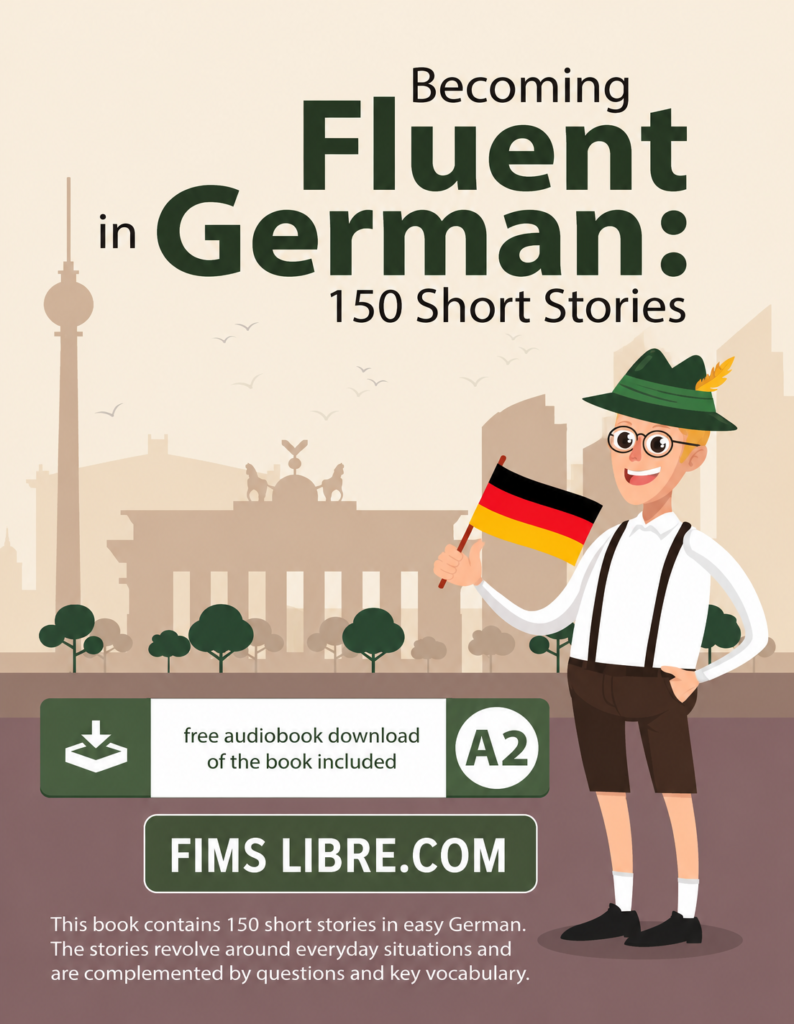
I picked up Becoming Fluent in German: 150 Short Stories by Philipp Eich expecting another collection of dry language exercises. Honestly, I wasn’t expecting much beyond simple reading practice. Instead, I found a book that feels surprisingly approachable. It doesn’t try to overwhelm the reader with complicated grammar or long passages. It simply encourages you to keep reading, and that’s probably its biggest strength.
From the very first story, I noticed that everything is designed for learners. The language stays simple, the situations are familiar, and every chapter feels like something that could happen in everyday life. Rather than feeling like homework, it felt closer to reading short diary entries or snapshots of ordinary people.
What You’ll Find Inside
Around forty percent of this book is really about giving readers practical German through repetition and everyday situations instead of complicated explanations. It contains 150 short stories covering ordinary experiences like taking the bus, visiting the doctor, renting an apartment, shopping, going to school, travelling, sports, family life, and many other daily routines. Most stories are only a page or two long, followed by comprehension questions and a vocabulary list that explains important German words and expressions in English.
I actually appreciated this structure more than I expected. Reading a story first, then checking whether I understood it through the questions, and finally reviewing the vocabulary felt natural. It never became exhausting because every chapter ended before my attention started drifting.
Another thing I liked was how frequently familiar words returned in different situations. At one point I realized I was recognizing vocabulary without translating every single word into English. That felt like genuine progress rather than memorization.
What I Liked Most
What surprised me most was how ordinary the stories are. They’re about missed trains, rainy weather, birthday gifts, supermarkets, language courses, doctors, family conversations, and countless little moments that happen in real life. Because of that, I found it easier to remember new vocabulary.
The writing isn’t trying to impress anyone with beautiful literature. Instead, it focuses on clarity. Maybe it’s just me, but I think that’s exactly what many language learners need.
I also liked that each story introduces vocabulary naturally before reinforcing it with review questions and word lists. Instead of jumping between unrelated grammar topics, the learning happens almost by accident while following small everyday narratives.
A Few Things I Didn’t Like
That said, the book isn’t perfect., if you are looking for complex literature, this isn’t it. The stories are quite short, which is a strength, but they don’t provide much of a deep narrative arc. Sometimes I wanted a character to have a bit more depth rather than just “Karl went to the shop.”
Also, since the book is aimed at the A2 level, some learners might find the vocabulary jumping around a bit. You might find a story about a bank in one chapter and then a story about Christmas in the next, which is fine, but it means you’re learning disparate sets of words rather than following one cohesive thread.
My Reading Experience
Reading this book became part of my daily routine rather than something I had to force myself to do. I usually finished several stories in one sitting without realizing how much vocabulary I had covered.
I don’t know why, but the short format made me feel less pressured. Missing a day didn’t matter because it was easy to pick up exactly where I left off. Looking back, I think that’s one of the reasons the book works so well. It removes the feeling that language learning has to be difficult.
There were also moments when I caught myself understanding complete sentences without checking translations. Those small victories made the experience genuinely satisfying.
Final Thoughts
If I’m being realistic, this isn’t the kind of book you’ll remember for unforgettable storytelling. That’s simply not its purpose.
What it does extremely well is provide consistent, practical reading practice through simple, everyday German. The combination of short stories, vocabulary explanations, and comprehension questions creates a learning experience that feels organized without becoming boring.
After finishing it, I came away with the impression that the author understands what language learners actually struggle with. Instead of filling pages with grammar theory, he lets readers build confidence one short story at a time.
In the end, I enjoyed it more than I expected. It’s not flawless, and there were moments when I wanted a little more variety or complexity, but as a practical companion for improving German reading skills, it succeeds remarkably well. For anyone who prefers learning through regular exposure rather than endless grammar exercises, this collection offers a steady, realistic path toward becoming more comfortable with the language.
Join Our Facebook Learning Groups
🇩🇪 Learn German Free 🇬🇧 English Learning Group 🇪🇸 Spanish Learning GroupJoin our educational Facebook communities to improve your language skills, practice daily conversations, and connect with learners from around the world.