First Impressions
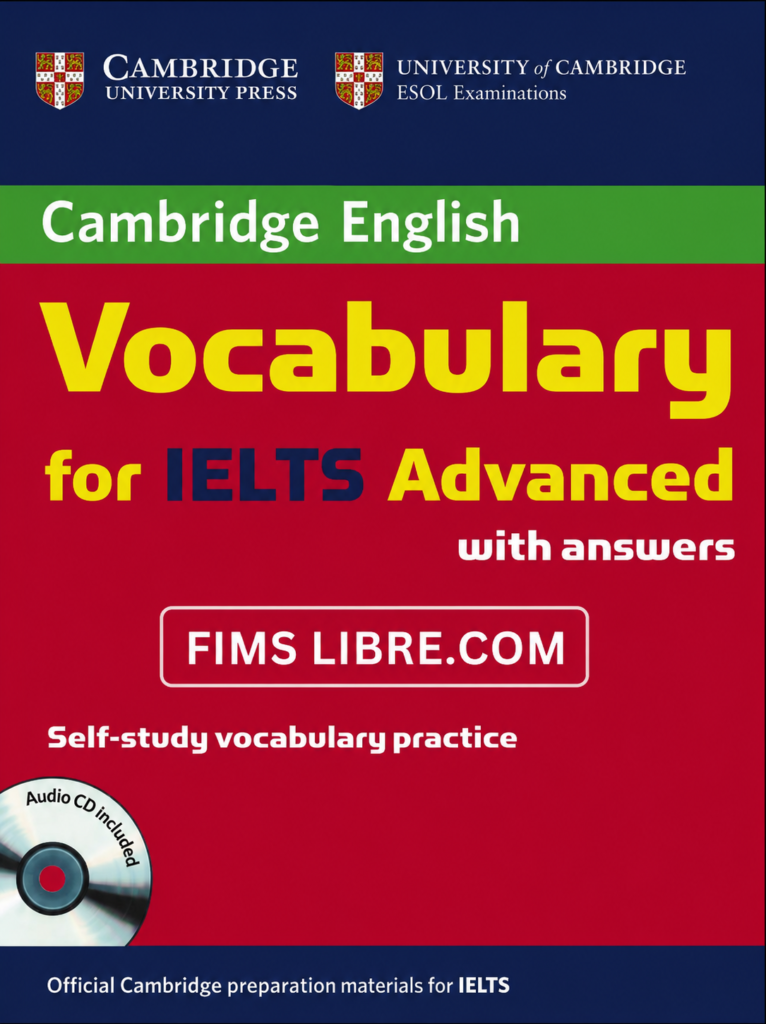
When I first picked up Cambridge Vocabulary for IELTS Advanced by Pauline Cullen, my initial thought was, “Okay, here comes another thick exam prep book.” We’ve all seen them—usually dry, overwhelming, and focused entirely on drilling lists of words into your head until you’re sick of them. Honestly, I wasn’t expecting much beyond the usual rote memorization exercises.
I’m happy to report that, while it is clearly an exam-focused book, it doesn’t feel like a mindless vocabulary dump. It actually tries to teach you how to use these higher-level words in context, which is the only way this kind of stuff ever sticks for me.
What’s This Book Really About?
This isn’t a book for someone who just wants to learn a few random “fancy” words to sound smart. It’s strictly for high-level learners aiming for that upper band in the IELTS. The whole premise is about moving beyond basic vocabulary and into the nuanced language expected in an academic or formal setting.
The book is organized into units that group vocabulary by topic—things like “Media and the Arts,” “Work and Business,” or “Science and Technology.” But instead of just giving you a list of definitions, it embeds these words into reading passages and listening tasks that mirror the actual exam. It forces you to see how a word behaves in a sentence, not just what it means in isolation.
A Quick Walk Through the Content
The structure is quite consistent, which I found helpful once I settled into the rhythm of it. Each unit usually kicks off with an introduction to the topic to get your brain in the right gear. From there, you work through:
- Contextual reading or listening tasks: These use the target vocabulary in a realistic way.
- Analysis sections: You’re asked to look closely at collocations—those word pairings that sound natural to native speakers but are tricky for the rest of us.
- Practice exercises: These are designed to mimic IELTS-style questions, so you’re practicing for the test without realizing it.
- “Exam Tips”: Little boxes scattered throughout that point out common pitfalls, like distinguishing between words that seem like synonyms but aren’t interchangeable.
I particularly liked that the book doesn’t shy away from complex grammar. It often pairs specific vocabulary with the grammatical structures that usually accompany them. It’s a subtle approach, but it pays off when you’re trying to write an essay that flows well.
Things That Stood Out to Me
What surprised me most was how much emphasis there is on collocation. I’ve spent years learning lists of synonyms only to find out I was using them in unnatural ways. This book constantly corrects that behavior.
“Learning a word isn’t just about the definition; it’s about knowing which words it likes to hang out with.”
I found myself returning to the sections on formal writing over and over. There’s a section, for instance, on how to describe trends and changes that was significantly more practical than what you find in most generic English textbooks. It’s not just about the words; it’s about the precision of the language.
A Couple of Weak Spots
If I’m being realistic, the book can feel a bit intense. It is not for the faint of heart. If your current level isn’t already quite solid, you might feel like you’re drowning in new information. I also found that some of the listening exercises were a bit tedious. While they are great for exam practice, they don’t always feel like the most engaging way to spend an afternoon if you aren’t actively cramming for the test the next week.
At one point, I felt like the sheer volume of vocabulary was a bit repetitive. You encounter the same words in slightly different contexts repeatedly, which is obviously good for retention, but it can make the pacing feel a bit sluggish if you’re trying to push through a few units in one sitting.
Final Thoughts
Looking back, did this book improve my vocabulary? Yes. It didn’t just give me a list of words; it helped me understand the texture of the language. It’s a book that rewards patience. If you’re just looking for a quick fix, this isn’t it. But if you’re genuinely trying to elevate your English to that academic level and you’re willing to put in the work, it’s a solid resource.
I think it works best when you don’t treat it as a textbook to be finished, but as a reference to keep on your desk. I’ll definitely be keeping my copy around whenever I need to brush up on how to articulate more complex, formal ideas.
Join Our Facebook Learning Groups
🇩🇪 Learn German Free 🇬🇧 English Learning Group 🇪🇸 Spanish Learning GroupJoin our educational Facebook communities to improve your language skills, practice daily conversations, and connect with learners from around the world.