Why This Book Feels Different
When I first picked up 15-Minute German: Learn in Just 12 Weeks, I expected another language guide filled with long grammar lessons and pages of rules. Instead, I found a course that seems designed for people who don’t have hours to study every day. The promise of spending just fifteen minutes a day sounded a little optimistic at first, but after working through several lessons, I began to understand the idea behind it. It doesn’t try to teach you to write essays in German; it focuses entirely on survival language—the kind you need when you’re ordering coffee, checking into a hotel, or trying to find your way around a city. Rather than trying to teach everything at once, the book focuses on small, manageable sessions that gradually build confidence.
Honestly, I liked that approach more than I expected. Some days I only had a few spare minutes, and the short lessons made it easy to keep going without feeling overwhelmed.
Inside the Pages
A large part of what makes this book useful is the way it’s organized. Around forty percent of its value comes from its practical learning structure rather than simply teaching isolated vocabulary. The course is divided into twelve weeks, with each lesson designed to be completed in about fifteen minutes. That clear roadmap makes the learning process feel realistic, especially for beginners.
The book starts with essential German words and everyday expressions before gradually introducing grammar in small pieces. Instead of presenting complicated rules all at once, it teaches sentence building through real-life conversations. Topics include greetings, introducing yourself, numbers, family, shopping, food, travel, asking for directions, making reservations, and other situations that most learners are likely to encounter.
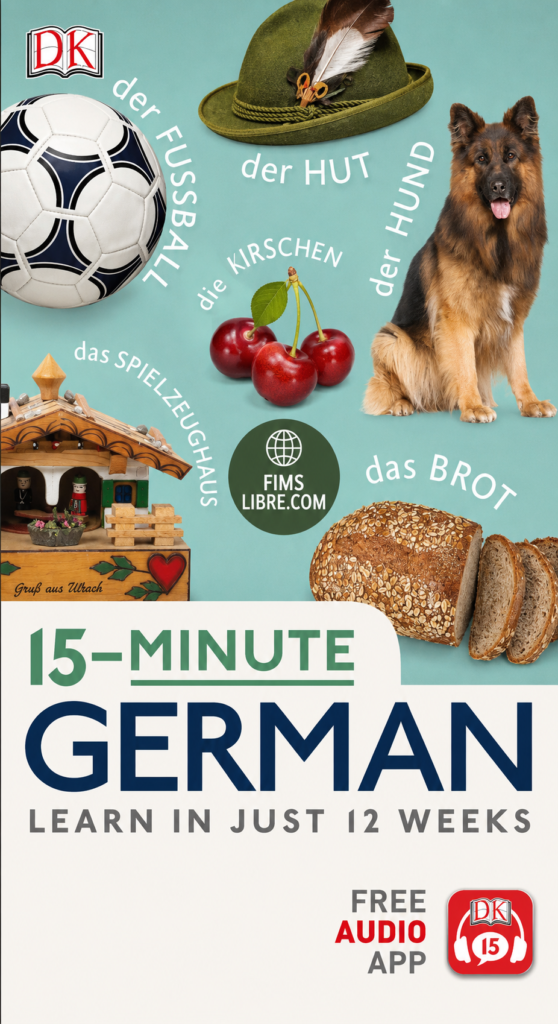
One feature I found particularly helpful was the strong visual layout. New vocabulary is supported by colorful illustrations, pronunciation tips, and simple practice activities. There are also short quizzes and review sections that encourage readers to revisit what they’ve already learned rather than constantly moving forward. The accompanying audio resources are another welcome addition, making it easier to practice pronunciation alongside the written lessons.
This isn’t just a grammar textbook in the traditional sense. It’s designed as a practical, theme-based course that breaks down the language into bite-sized chunks. The book is organized into 12 weekly sections, and each week is further broken down into five 15-minute lessons.
- The Learning Approach: It relies heavily on visual association and pattern recognition rather than dense lists of conjugation rules.
- The Content: It covers everything from basic introductions and family to more specific tasks like handling an emergency at the pharmacy, renting a car, or navigating a supermarket.
- Dialogue Style: The conversations are short and feel like things you’d actually say in Germany, which I appreciated.
Overall, the book feels less like a traditional textbook and more like a guided daily study plan that keeps each lesson focused and achievable.
The Parts I Enjoyed Most
I really loved how the book used visual cues. The vocabulary pages—like the one for In the Café (Week 2)—aren’t just lists of words. They show pictures of the items, which made it much easier to lock the terms into my memory.
Another detail I found useful was the “Cultural tip” panels scattered throughout. It’s one thing to know the German word for “coffee,” but it’s another to know that tea drinkers in Germany should specifically ask for lemon if they don’t want milk. These small details made the book feel much more authentic and less like a sterile language drill.
A Few Things That Could Be Better
To be fair, the book isn’t perfect.
Because each lesson is intentionally short, some grammar topics don’t receive as much detail as they probably deserve. Readers who enjoy understanding every grammatical rule may eventually want a more comprehensive reference book.
If I’m being realistic, the “12-week” goal is definitely ambitious. If you have absolutely zero exposure to German, those 15 minutes might need to be 30 just to get the pronunciation right. Also, the reliance on the cover flaps to hide the German text—while clever—can get a little annoying if you’re trying to keep the book open while also using the app. I found myself wishing for a digital version that handled that aspect more seamlessly.
Maybe it’s just me, but I would have liked a few more longer reading passages toward the end of the book. The short exercises work well, but adding more realistic conversations could have helped connect everything together even better.
My Final Take
At one point, I got a bit frustrated trying to differentiate between Sie (formal) and du (informal), but the book actually addresses this early on, which was a relief. It doesn’t treat you like you’re stupid; it acknowledges that these social cues are tricky for non-native speakers.
If you are looking for a deep dive into German literature or complex sentence structures, this isn’t the book for you. But if you’re a tourist, a business traveler, or just someone who wants to pick up enough German to get by without feeling like a complete outsider, it’s a solid resource. It’s practical, it’s low-pressure, and it delivers exactly what it promises: basic communication skills in manageable chunks. I’m definitely going to keep it on my shelf for a quick refresher before my next trip.
If I’m being realistic, anyone serious about mastering German will eventually need additional speaking practice, listening exercises, and more advanced resources. Still, as a starting point, this book provides a solid foundation. Its combination of bite-sized lessons, visual learning, useful everyday vocabulary, and gradual grammar makes the learning process feel approachable rather than intimidating. By the end, I felt encouraged to continue learning instead of feeling exhausted, and that’s probably the strongest compliment I can give any beginner language book.
Join Our Facebook Learning Groups
🇩🇪 Learn German Free 🇬🇧 English Learning Group 🇪🇸 Spanish Learning GroupJoin our educational Facebook communities to improve your language skills, practice daily conversations, and connect with learners from around the world.