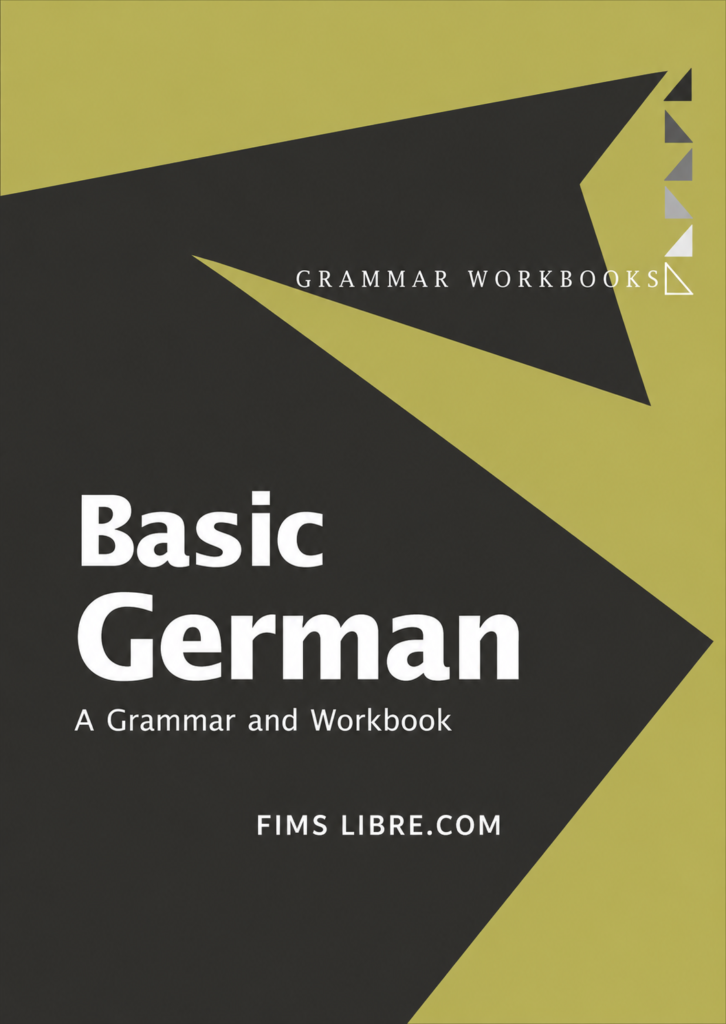
First Impressions
When I first picked up Basic German: A Grammar and Workbook by Heiner Schenke and Karen Seago, I honestly wasn’t expecting it to feel so approachable. I’ve looked at other language books that felt like they were trying to crush me under the weight of heavy, academic jargon right from the intro. This one, however, acknowledges that German has a reputation for being “awful” (even quoting Mark Twain) and immediately tries to lower the stakes. It doesn’t promise you’ll be fluent in a weekend; instead, it frames German as a systematic language that’s actually manageable if you just break it down into patterns. That perspective shift was exactly what I needed.
What’s This Book Really About?
The book’s main goal is to get you comfortable with the fundamental building blocks of the language. It’s designed for independent study or as a companion to a course, covering 28 units that progress from the absolute basics—like present tense verbs—to more nuanced topics like adjective endings and word order.
What I really appreciated was how it handles grammar. It doesn’t just dump rules on you. It contrasts German structures with English ones, which makes those “aha!” moments happen way more often. For instance, the section on why German uses capital letters for all nouns (not just proper names) and how that actually helps you spot nouns in a sentence was a simple observation that made reading texts feel slightly less daunting.
What Stood Out to Me
The teaching style feels very cumulative. It doesn’t just teach a rule and walk away; it forces you to use it. I kept noticing that grammar was introduced through clear, functional conversations instead of isolated, dry rules, which made new concepts feel much more “real.”
A few things that particularly caught my attention:
- The “Sie” vs. “du” distinction: This is a classic stumbling block for beginners, and the book explains it early and keeps it consistent throughout all exercises.
- The “Finite Verb” Focus: I found myself grateful that the book explicitly defines grammatical terms like “finite verb” early on. It makes it much easier to follow later explanations about word order.
- The Checklists: Every unit ends with a checklist. I’m usually the type to skip these, but I found them to be surprisingly good at highlighting the gaps in my understanding before I moved on to the next, more difficult unit.
German is a very systematic language, and very soon you will realise that there are certain patterns which occur again and again. If you bear this in mind you will see that, after the first few weeks of a fairly steep learning curve, things will become easier.
My Reading Experience
Reading this was definitely a process. I liked that the units were bite-sized; I could easily do one in a single sitting without feeling overwhelmed. I did find the pacing to be quite fast after about Unit 10. Once I hit the section on the four cases, I had to slow down significantly.
Honestly, the exercises were a lifesaver there. They progress from simple recognition (just filling in verb endings) to more complex application (translating full sentences). I found some of the sentence translations for the dative and genitive cases quite challenging, but I suppose that’s the point—there’s no way to learn cases without actually struggling through the exercise of using them.
If I’m being realistic, some parts felt a bit repetitive. The verb tables can feel a bit endless, but in hindsight, the repetition is what eventually made the patterns stick. I found myself actually enjoying the exercise sections because they provided immediate validation that I had actually grasped what I just read.
What Stayed With Me
The biggest takeaway for me is the emphasis on learning nouns with their articles. The book repeats this advice constantly: learn it as “der Tisch,” not just “Tisch.” It sounded a bit tedious at first, but looking back, it really is the only way to internalize the gender system.
I also liked the honesty about word order. The book admits that German word order is “much more flexible” than English, but it provides these super clear, rigid rules for the position of the finite verb (the second idea in statements, the first in questions) that made building sentences feel like solving a puzzle.
Final Thoughts
Is it a perfect book? Maybe not. It doesn’t have the high-gloss, colorful aesthetic of some modern language apps or immersive coursebooks. However, it feels like a very honest, grounded resource. It doesn’t try to be “fun” in a way that distracts from the work; it tries to be useful.
If you are looking for a gentle, systematic way to ground yourself in the mechanics of German—the stuff that actually allows you to build sentences correctly—this is a solid choice. It’s not going to teach you to chat effortlessly at a party, but it will give you the structural backbone you need to start doing exactly that. I’d recommend it to anyone who feels like their current language study is lacking a solid, logical foundation.
Join Our Facebook Learning Groups
🇩🇪 Learn German Free 🇬🇧 English Learning Group 🇪🇸 Spanish Learning GroupJoin our educational Facebook communities to improve your language skills, practice daily conversations, and connect with learners from around the world.