A Practical Vocabulary Guide That Fits Into Everyday Learning
First Impressions
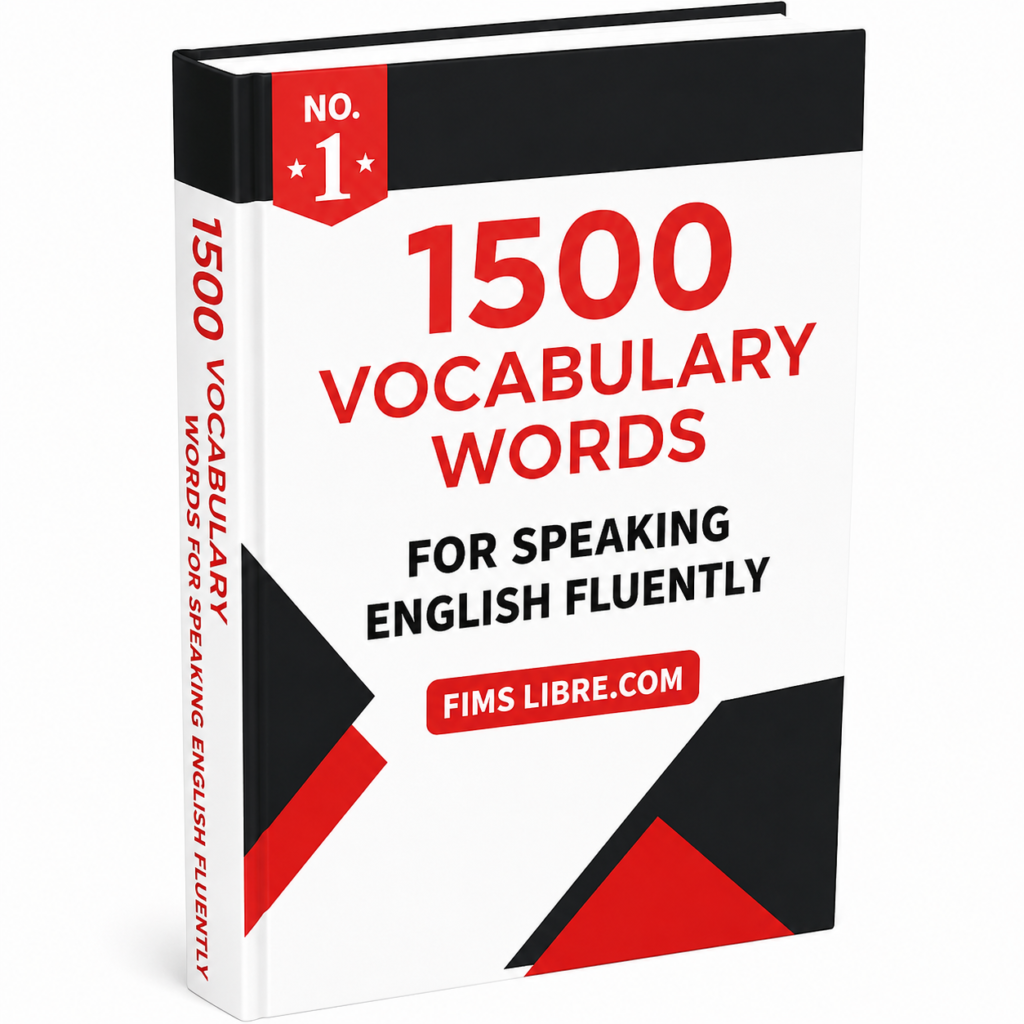
I picked up 1500 Vocabulary Words for Speaking English expecting another book full of long word lists and dictionary-style definitions. Honestly, I wasn’t expecting much beyond that. But after working through several sections, I realised it was trying to solve a very specific problem: helping learners speak English more naturally by building useful vocabulary little by little.
The book doesn’t feel academic or overly complicated. Instead, it keeps the focus on words that people are actually likely to hear and use in daily conversations. That made it much easier to stay engaged, especially on days when I only had twenty or thirty minutes to study.
A Quick Walk Through the Content
Rather than presenting random vocabulary, the book organises around a large collection of useful English words that are commonly used in everyday communication. The vocabulary ranges from general daily expressions to words that appear in school, work, travel, shopping, social situations, and personal conversations. The overall goal seems to be improving spoken English by steadily increasing the learner’s active vocabulary.
Each section introduces a group of words along with their meanings and simple explanations. In many places, the vocabulary is supported with example sentences that demonstrate how the words naturally fit into conversations instead of existing as isolated definitions. I appreciated that because memorising words without context rarely works for me.
The book also encourages learners to recognise similar words, understand common expressions, and become familiar with vocabulary that native speakers regularly use. Some chapters include practice opportunities that reinforce previously learned words, while others gradually introduce more challenging terms without making the material feel overwhelming.
Another thing I noticed was that the language remains fairly accessible throughout the book. It doesn’t suddenly jump into advanced vocabulary that most intermediate learners would struggle with. Instead, it builds confidence step by step, making it suitable for self-study as well as classroom practice.
Although the title highlights speaking, I found that many of the words would also improve writing, reading, and listening comprehension. Expanding vocabulary naturally affects every language skill, and this book quietly supports all of them without trying to do too much at once.
My Reading Experience
I found myself treating this less like a book to finish and more like a daily learning companion. Some mornings I completed just a few pages before moving on with my day, and surprisingly, that felt more effective than trying to study large sections at once.
What surprised me most was how often I recognised words that I had heard before but never felt confident using myself. Reading the explanations and examples gave me enough context to finally understand when those words actually belong in a conversation.
At one point I even went back to earlier chapters because I realised I remembered more vocabulary than I expected. Looking back, the steady pace probably helped more than trying to memorise dozens of new words in one sitting.
What I Liked Most (and a Few Things That Didn’t Work as Well)
The biggest strength, in my opinion, is its simplicity. The book doesn’t try to impress readers with complicated teaching methods. Instead, it focuses on practical vocabulary that learners can gradually add to their everyday English. The examples are usually clear, and the organisation makes it easy to study one section without feeling lost.
I also appreciated that the vocabulary choices felt relevant. Many of the words appear frequently in conversations, articles, and everyday communication, so studying them never felt like wasted effort. The straightforward layout also deserves credit because finding previous lessons or reviewing older words is quite easy.
That said, there were moments when I wanted a little more depth. Some explanations are intentionally brief, which keeps the book moving, but occasionally I wished there were additional examples showing the same word in different situations. That would have made certain vocabulary easier to remember.
Maybe it’s just me, but I also missed having larger review exercises after several chapters. While individual examples are useful, a few longer activities combining previously learned vocabulary would have strengthened the overall learning experience.
Who Will Probably Enjoy This
From my perspective, this book works best for learners who already know basic English and want to become more confident speakers without feeling overwhelmed. It doesn’t require long study sessions, so it’s a good choice for people who prefer learning a little every day.
Complete beginners may still need some additional grammar support alongside it, while advanced learners might already know many of the included words. I think intermediate learners will probably get the most value because the vocabulary sits comfortably between everyday English and more fluent communication.
Final Thoughts
After spending time with 1500 Vocabulary Words for Speaking English, I came away with a positive impression. It isn’t trying to be a complete English course, nor does it promise unrealistic results. Instead, it offers a practical collection of vocabulary presented in a simple, approachable way that encourages steady progress.
Its greatest strength is making vocabulary learning feel manageable rather than intimidating. Although I would have liked more detailed examples and larger review activities, those are relatively small criticisms compared with the overall usefulness of the book.
I can easily see myself returning to certain sections whenever I need a quick vocabulary refresher. For learners who want to strengthen their spoken English by building a solid vocabulary foundation one step at a time, this is a resource that can stay useful long after the first read.
Join Our Facebook Learning Groups
🇩🇪 Learn German Free 🇬🇧 English Learning Group 🇪🇸 Spanish Learning GroupJoin our educational Facebook communities to improve your language skills, practice daily conversations, and connect with learners from around the world.