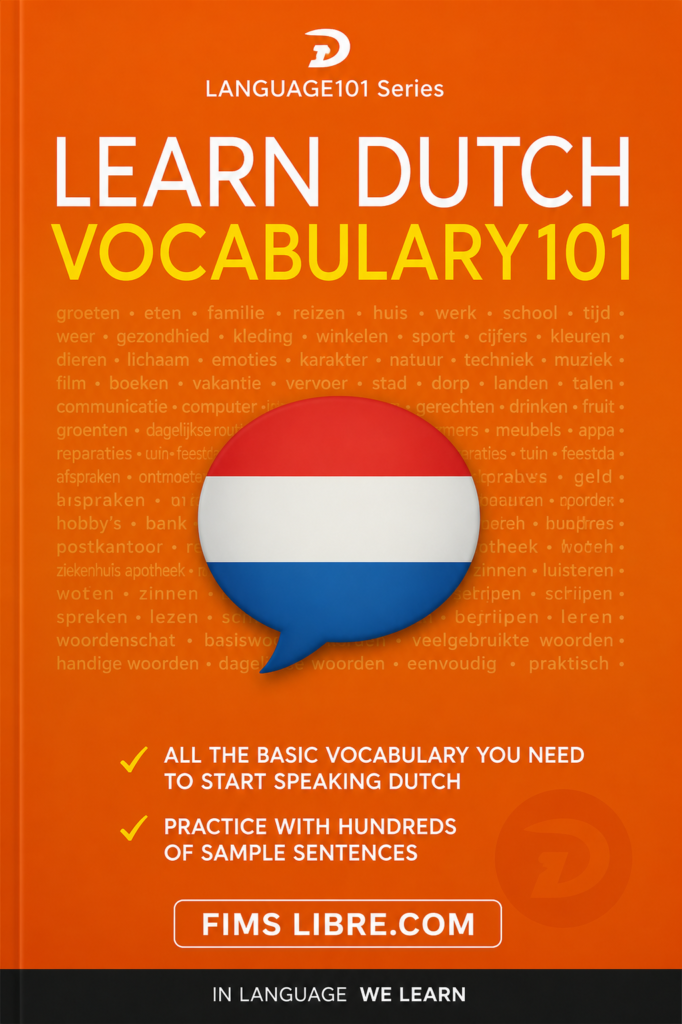
Learning Dutch One Word at a Time: My Thoughts on Word Power 101 – Learn Dutch
First Impressions
I picked up Word Power 101 – Learn Dutch because I wanted something light that could help me build vocabulary without feeling like I was reading a grammar textbook. Sometimes language books try to teach everything at once, and that usually leaves me overwhelmed. This one takes a much simpler route, and honestly, I appreciated that from the first few pages.
Rather than focusing on grammar rules or long explanations, the book is built around useful vocabulary grouped into everyday topics. It explains that words are easier to remember when they’re organized by theme and supported with pictures, example sentences, and optional audio recordings.
A Look Inside the Book
The content is arranged into practical categories instead of random vocabulary lists. Early chapters introduce animals with common words like birds, dogs, cats, horses, fish, and many others. Every word comes with its Dutch translation, example sentences, and visual illustrations that make it easier to connect the word with its meaning rather than simply memorizing it.
After that, the book moves into parts of the body. It starts with the head and face before covering the rest of the body, introducing vocabulary such as hair, eyes, nose, mouth, hands, bones, muscles, and more. I liked that many entries also include simple everyday expressions instead of isolated words, which makes the vocabulary feel more practical.
Another section focuses on basic colors. Instead of simply listing color names, it uses familiar objects and short sentences so learners naturally associate the colors with real situations. From there, the book continues into fruits, vegetables, common foods, and finally introduces numbers from zero to ten. These chapters cover vocabulary that beginners are likely to encounter almost immediately when traveling or having simple conversations.
One thing I noticed is that the layout stays very consistent throughout the book. Every page follows the same structure: the Dutch word, English translation, examples, and supporting visuals. That consistency makes it easy to study in short sessions without needing to figure out a new format every few pages.
My Reading Experience
What surprised me most was how quickly I started remembering words without actually trying very hard. I normally forget vocabulary lists after a day or two, but seeing pictures alongside short example sentences helped things stick much better.
I also found myself reading just a few pages whenever I had spare time instead of sitting down for a long study session. Because each page introduces only a small amount of information, it never feels exhausting. That made it easier to keep coming back to it.
At one point I realized I was recognizing several Dutch words while browsing online, and that was surprisingly satisfying. It’s a small achievement, but it reminded me that consistent exposure really works.
Things I Appreciated… and a Couple I Didn’t
There are several strengths that stood out to me. The organization is excellent, the vocabulary choices are practical, and the visual approach makes studying less intimidating. The example sentences also give a better sense of how words are actually used instead of leaving them isolated on a flashcard.
To be fair, the book isn’t designed to teach the language completely. If you’re hoping to understand Dutch grammar, sentence structure, or hold long conversations after finishing it, you’ll probably be disappointed. This is clearly a vocabulary-building resource rather than a complete language course.
I also wished there were a few short review exercises or quizzes at the end of each section. They would have made it easier to check how much I had actually remembered before moving forward.
Who I Think Will Enjoy It
If you’re completely new to Dutch, I think this book does a nice job of lowering the barrier to entry. It’s especially useful for visual learners, travelers, or anyone who wants to build a solid vocabulary before diving into grammar lessons.
Maybe it’s just me, but I wouldn’t recommend reading it from cover to cover in one sitting. It works much better as a daily learning companion where you spend ten or fifteen minutes reviewing a category at a time.
Final Thoughts
Looking back, I enjoyed this book more than I expected. It doesn’t promise miracles, and it doesn’t try to replace a full Dutch course. Instead, it focuses on helping readers become familiar with useful everyday vocabulary through repetition, context, and simple examples.
Its biggest strength is its simplicity. While I would have liked a few practice activities and slightly more varied examples, I still found it to be an enjoyable and effective resource for building confidence with basic Dutch words. For anyone beginning their Dutch learning journey, it provides a comfortable starting point without making the process feel overwhelming.
Join Our Facebook Learning Groups
🇩🇪 Learn German Free 🇬🇧 English Learning Group 🇪🇸 Spanish Learning GroupJoin our educational Facebook communities to improve your language skills, practice daily conversations, and connect with learners from around the world.