Learning German One Topic at a Time: My Thoughts on Learn German Vocabulary – Word Power 101
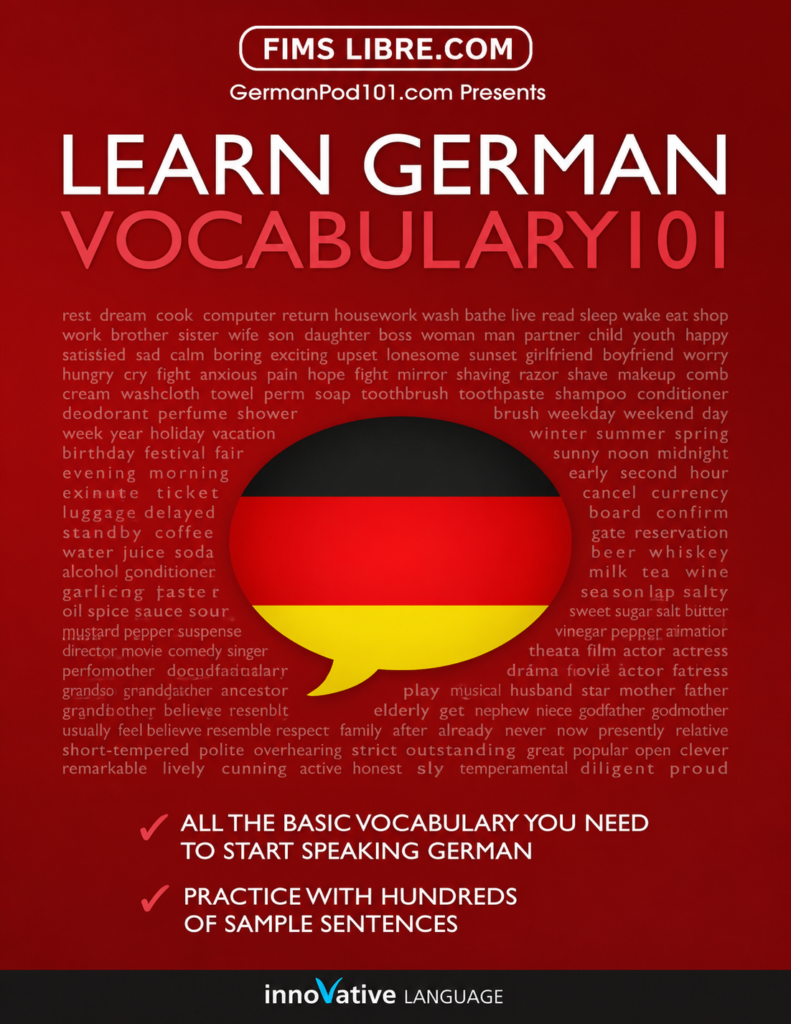
When I first opened Learn German – Vocabulary 101 by GermanPod101.com, I wasn’t expecting anything too fancy. Honestly, language learning books can be hit or miss—some feel like dense reference encyclopedias while others look like primary school picture books. This one lands somewhere in between, framed as an approachable e-book built to give beginners a quick starting point with basic vocabulary.
My initial thought was that it felt a bit sparse, but as I started flipping through the pages, I began to see what the creators were going for. It is essentially a visual and contextual digital flashcard deck.
What’s This Book Really About?
I usually expect vocabulary books to be little more than long lists of words, so I didn’t start this one with very high expectations. After spending time with it, though, I realized it follows a much more practical approach. Instead of presenting random vocabulary, it groups words into everyday topics such as animals, body parts, colors, food, numbers, household items, travel, weather, and many other situations that learners are likely to encounter. Each entry includes the German word, its English meaning, example sentences, and visual illustrations, making it easier to understand how the vocabulary is actually used rather than simply memorizing isolated terms.
One thing I appreciated was the organization. The book starts with familiar topics like animals before gradually moving into broader categories. That made it feel less overwhelming because I could focus on one subject at a time instead of jumping between unrelated words.
The examples are another strong point. Rather than stopping after giving a translation, the book places words inside short phrases and simple sentences. I found myself reading those examples almost as much as the vocabulary itself because they quietly introduce sentence structure without turning the experience into a grammar lesson.
The visual element also helps more than I expected. Pictures are simple, but they make remembering unfamiliar words noticeably easier. If you’re someone who learns visually, this approach works surprisingly well.
The book isn’t designed to teach German grammar in depth. Instead, its goal is to build a practical vocabulary that learners can recognize and eventually use in conversation. There’s also an audio companion mentioned in the introduction for pronunciation practice, which fits nicely with the vocabulary-focused approach.
What Stood Out to Me
What surprised me most about this layout was how helpful it is to see grammatical gender (der, die, das) tied directly to every noun right from the start. If you’ve ever tried learning German, you know that guessing noun genders later on is an absolute nightmare. Having Kuh labeled clearly as feminine or Pferd as neutral right on the page saves a lot of headaches down the road.
I also appreciated the simplicity of the sample sentences. They don’t try to show off complex grammatical structures; they just show you how the word behaves in a sentence. Seeing a word like Auge (eye) used in a natural context like “There is an eyelash in my eye” makes the vocabulary feel immediately usable rather than purely theoretical.
A Few Things I Didn’t Like
To be fair, the book isn’t perfect.
If you’re looking for detailed grammar explanations or long reading passages, you probably won’t find what you’re hoping for here. The focus stays almost entirely on vocabulary, so learners will eventually need another resource to understand grammar more deeply.
I also found some example sentences a little repetitive after a while. That’s understandable because vocabulary books naturally repeat structures, but after reading many pages in one session, I wanted slightly more variety.
Maybe it’s just me, but I also wished there were more short dialogues showing the words being used in real conversations. Seeing vocabulary inside actual conversations could make the transition from memorization to speaking feel smoother.
My Reading Experience
What surprised me most was how relaxing this book felt to read. Usually, language books make me feel like I’m studying for an exam. This one felt more like browsing through a well-organized picture dictionary with helpful examples.
At one point I caught myself testing whether I could remember the German words before looking at the English translations. That turned the reading into a small game, and I think that’s partly why I stayed engaged longer than I expected.
I don’t know why, but I also appreciated that the lessons never tried too hard to impress the reader. The book simply focuses on teaching useful vocabulary without unnecessary distractions.
Who Will Probably Enjoy This
If I’m being realistic, this book isn’t going to make anyone fluent on its own. However, if you are an absolute beginner who feels overwhelmed by traditional textbooks, or if you just need a quick visual reference guide to build up your core vocabulary, it serves its purpose well. It’s ideal for someone who learns best through flashcards, visual cues, and short sentence patterns rather than heavy linguistic theory.
Final Thoughts
Looking back, Learn German – Vocabulary 101 is a simple, no-nonsense tool that does exactly what it promises on the cover—nothing more, nothing less. It’s a bit rough around the edges in terms of formatting, and it certainly won’t replace a proper language course or daily practice, but as a supplementary vocabulary builder, it’s a handy resource to skim through when you’re just starting out.
Join Our Facebook Learning Groups
🇩🇪 Learn German Free 🇬🇧 English Learning Group 🇪🇸 Spanish Learning GroupJoin our educational Facebook communities to improve your language skills, practice daily conversations, and connect with learners from around the world.