First Impressions
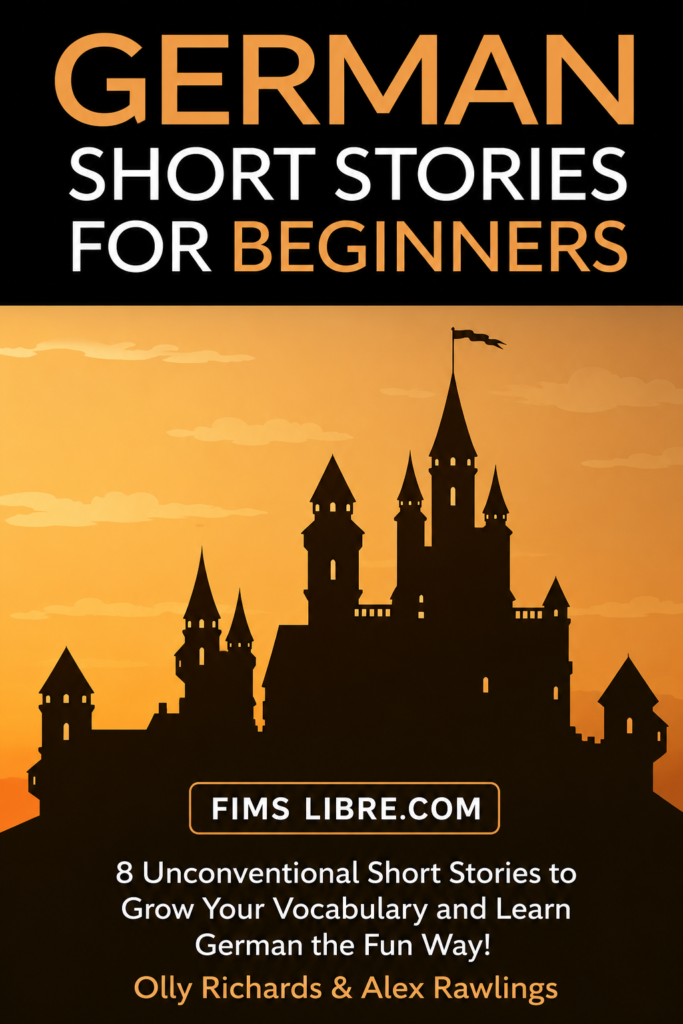
I picked up German Short Stories for Beginners because I wanted something that felt less like studying and more like reading for enjoyment. Language-learning books often promise to be “fun,” but many still end up feeling like textbooks with a different cover. This one surprised me. Instead of throwing grammar explanations onto every page, it focuses on telling simple stories while naturally exposing readers to everyday German. It’s designed for beginners around the A2–B1 level and contains eight short stories from different genres, along with vocabulary lists, chapter summaries, and comprehension questions to help readers build confidence without constantly reaching for a dictionary.
A Quick Look at What’s Inside
Rather than following one long storyline, the book offers eight separate adventures. Some stories lean toward mystery, while others include fantasy, science fiction, or light humor. That variety kept things fresh because I never felt like I was reading the same type of plot over and over.
The first story follows Daniel and his sister Julia as they travel from London to Germany to improve their German. What begins as a normal trip slowly turns into a chain of funny misunderstandings, unexpected detours, and strange coincidences. Later stories introduce mysterious creatures in forests, magical objects, dragons, invisible people, and unusual adventures that are simple enough for learners to follow but still interesting enough to keep reading.
One feature I appreciated was how each chapter ends with a short summary, a vocabulary section explaining difficult words in English, and a few multiple-choice questions. Instead of interrupting the story with translations on every page, the book encourages readers to keep moving forward and understand meaning from context before checking unfamiliar words. That approach felt much more natural than constantly stopping every few sentences.
The introduction also explains a reading method that encourages finishing the story first instead of worrying about every unknown word. Honestly, I think that’s one of the strongest ideas in the entire book because it’s exactly what many beginners struggle with.
What Stood Out to Me
The biggest strength, in my opinion, is that the authors understand how beginners actually read. The German is challenging enough that I learned new vocabulary, but it rarely became frustrating. I found myself guessing meanings from context much more often than I expected, and surprisingly, those guesses were usually correct.
Another thing I liked was the dialogue. Since many conversations use everyday expressions instead of overly formal language, the reading experience felt closer to real communication than many beginner textbooks.
I also appreciated that the stories weren’t purely educational. They actually try to entertain. Some plot twists were predictable, but others genuinely caught me off guard. The mix of mystery, humor, and fantasy kept me curious enough to continue reading, even when I came across unfamiliar grammar.
A Couple of Weak Spots
Looking back, it’s certainly not a flawless masterpiece. If I’m being realistic, the plot lines are pretty cheesy. The big reveal at the end of Das Wesen, for instance, feels like an episode of Scooby-Doo. If you’re coming into this expecting high literary drama or deep character development, you’re going to be disappointed. The plots exist strictly as vehicles to deliver comprehensible input.
Another minor frustration was the vocabulary selection in the chapter appendices. At times, words that felt fairly obvious were highlighted, while a trickier idiomatic phrase in the middle of a paragraph was left for me to figure out on my own. It wasn’t a dealbreaker, but at one point I found myself wishing for just a little more consistency in what the authors deemed “difficult.”
My Reading Experience
Honestly, this book changed the way I think about reading in another language. Before starting it, I believed I had to understand almost every word before moving on. After a few chapters, I became much more comfortable accepting that I wouldn’t understand everything immediately.
I wasn’t expecting such a simple change in mindset to make reading feel less stressful. Instead of translating constantly, I focused on following the story. Ironically, I think that helped me remember more vocabulary than when I actively tried to memorize word lists.
There were definitely moments when I had to reread a paragraph, especially during conversations, but that never felt discouraging. The built-in summaries helped confirm whether I had understood the important parts, which made the experience surprisingly relaxing.
Final Thoughts
Overall, I came away with a positive impression of German Short Stories for Beginners. It isn’t trying to replace a grammar course, and it doesn’t pretend to turn someone fluent overnight. Instead, it offers something that many language learners genuinely need: enjoyable reading practice that feels manageable.
Its greatest strength is balancing education with storytelling. The stories may not all become lifelong favorites, but they serve their purpose well by making German feel approachable rather than intimidating. If you’re somewhere between complete beginner and lower intermediate, this is the kind of book that makes consistent reading feel possible, and that’s probably its biggest achievement.
Join Our Facebook Learning Groups
🇩🇪 Learn German Free 🇬🇧 English Learning Group 🇪🇸 Spanish Learning GroupJoin our educational Facebook communities to improve your language skills, practice daily conversations, and connect with learners from around the world.